English
 翻訳会社
翻訳会社 tradução em papel
 empresa de traducción
 traduzione cartacea
 Papierübersetzung
 traduction papier
 papieren vertaling
 ترجمه مقاله
 แปลกระดาษ
 бумажный перевод
 ترجمة ورقية
 makale çeviri
 Tradutor de Artigos
 學術翻譯
學術翻譯 학술출판번역
 论文翻译
论文翻译

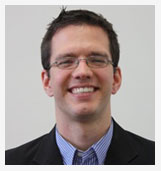
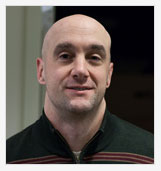
Interview
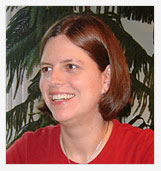
You have completed your bachelors in Chemical Engineering and are currently pursuing a PhD in Biomolecular Engineering, what drew you into becoming a translator?
Translation is a skill I have developed alongside my other technical abilities. I spent two years in Brazil as a religious missionary and as I developed my technical capabilities, I also expanded my vocabulary in Portuguese, and translation is something I have enjoyed doing and so I continue to pursue it.
Do you think a person can be an expert in English and Portuguese, two such distinct languages?
I can read and write well in English thanks to my nativity and have learnt a great deal about Portuguese thanks to my stay in Brazil. At this time I have already expanded my vocabulary and grammar skills since my return from Brazil. So, it's important that one keeps on constantly learning in order to become an expert in more than one language.
How do you keep yourself updated with the recent developments in the industry and the subjects you translate, and at the same time consistently maintain and improve your English and Portuguese skills?
I am a member of the American Translators Association and they send me monthly newsletters in addition to a language-specific newsletter, wherein I get the latest information about the happenings in the world of Portuguese–English translation and interpretation. I have also helped with the training of two postdoc students, who came from Brazil, and which allowed me to converse with them in both English and Portuguese. I have also worked for other agencies as a freelance translator which has kept me updated with the recent happenings in this Industry.
Could you tell me about your areas of specialization?
My chief areas of specialization are in Chemical Engineering, Biochemistry, and Molecular Biology. I have also done translation in several other related areas, including Mechanical engineering, Electrical engineering, and Civil engineering. I have also done some work in Geology but my core areas of technical specialization are Chemical engineering, Biochemistry, Biophysics, and related fields.
How do you actually go about translating manuscripts? What, in your opinion, are the essential attributes every professional translator must possess?
The goal, of course, is to clearly communicate the author's intent in English and maintain as much of their style and tone as possible. I try to achieve this to the best of my abilities by reading and understanding the source text as thoroughly as possible. As I do that, I also make efforts to clarify and improve the style, if necessary; specifically, for scientific articles which are often wordy and convoluted.
Have you translated papers from outside of your areas of expertise? If yes, how have you gone about with the selection and usage of technical terms for such assignments?
I take a significantly longer time to translate documents which are outside of my area of expertise. So, I try to avoid accepting such assignments for that reason. Not only do they take longer but I know that my final translation would not be of the same quality as someone who is familiar with the field.
According to you, is there a difference between the translation of academic and non-academic papers? Do you have a different approach to translate the same?
I have more experience in translating academic papers compared to non-academic. I would say there is probably more latitude in the non-academic works to clarify style or to simplify the style of the paper. Typically, in the academic papers, at least on the ones that I have worked on in the engineering and biochemistry fields, there is not as much unnecessary wording or wordage as there might be in a non-academic paper. There is more technical content that has to be maintained in an academic paper; however, in a non-academic paper, I would say the tone and writing style of the author are more important.
Could you give us an example of an assignment that challenged your skills as a translator?
I was given an assignment to translate a quality control manual for a time service division who is responsible to take care of the Atomic Clock and the Brazilian legal time. This is an area that I wasn't familiar with and the document was also written in a very legal form of Portuguese which took a significant amount of time to translate. By taking it slowly and reading through the document carefully as well as by interacting with the reviewer who worked on the document along with me, we were able to produce a document that successfully met the client's expectations.
Have you used/are currently using any translation software and how has your experience been with it?
I use online search method, only to check for some individual technical terms on a case to case basis. Translation software does not work well to translate entire sentences and the final output is quite poor.