English
 翻訳会社
翻訳会社 tradução em papel
 empresa de traducción
 traduzione cartacea
 Papierübersetzung
 traduction papier
 papieren vertaling
 ترجمه مقاله
 แปลกระดาษ
 бумажный перевод
 ترجمة ورقية
 makale çeviri
 Tradutor de Artigos
 學術翻譯
學術翻譯 학술출판번역
 论文翻译
论文翻译

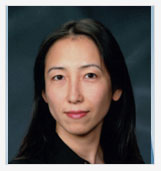
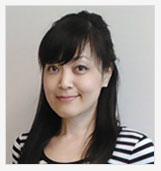
Interview
Could you tell me about your areas of specialization?
I specialize in medical subjects and have worked in medical fields such as pediatrics, dental and oral surgery, internal medicine, surgery, cardiology, gynecology, pneumology, sports medicine, and oncology. I have also recently started undertaking translation check work in the education field.
Why did you choose to be a Translation Checker?
I had originally applied as a translator, but was actually offered a translation checker task. A translation checker has a very important role. It requires the skill to check subtle differences of nuance between Japanese source text and English-translated text. It is a rewarding task in which I can make the most of the knowledge and experience of Japanese as a first language as well as English as a second language.
Please tell me about your history and experience with the English language.
Like other average Japanese people, I started learning English from junior high school. After graduation from junior college in Japan, I transferred to a university in Washington. After graduation from the university, I went onto a graduate school in Oregon and studied Japanese education and general education. Because I currently live in the United States, I use English much more frequently than Japanese, and hence I am confident that my English ability matches that of a native speaker. In the United States, my main occupation was as a Japanese language teacher, while working as an interpreter and a translator were my sideline businesses; however, now those sideline businesses are becoming my main occupation. For the past six months, I have worked as translation checker and telephonic medical interpreter. These experiences gradually enriched my vocabulary and broadened my knowledge in medical subjects.
How are you able to maintain and improve your English skills?
As I have been living in the United States for 20 years, daily conversations always help in improving and maintaining my English language skills. I hardly use academic English terminologies I used to use in my graduate-school days after I started teaching Japanese language in a high school in the United States. However, my English language skills consistently improved due to the constant exposure to the latest medical vocabulary and expressions during my role as a medical interpreter and translation checker. In particular, interpretation requires one to respond quickly without spending time in consulting a dictionary.
What do you think is most important as a checker?
As I have already mentioned, the most important thing is to check and capture subtle differences of nuance between Japanese and English and reflect them exactly in the translated text through the understanding of each language and each other's cultural background. Although translation can be executed mechanically using software, the task of a translator or a translation checker is an important one that can be accomplished only by human.
What do you find most interesting while checking documents?
Every project, every day always brings me fresh, new experiences. Even when background knowledge about the assignment or the subject is not needed in a project, I love to know about the subject and its related studies. So I search and read about the background through internet and other media even after the translation check assignment. I feel a sense of achievement thanks to the opportunity to be the first one to view the product of latest studies prior to their publication.
Which was the most remarkable checking assignment you have ever done?
Every single assignment is unique and interesting to me. Above all, assignments in which I corrected errors through my research via internet or related documents, or assignments in which my correction reflects differences of the subtle cultural nuance give me a feeling of immense pride. If the text for translation is a treatise on diseases such as type 1 diabetes or breast cancer, which my close acquaintances can also get, I get more eager and curious about the task.
How do you keep yourself updated with the recent happenings in the subjects you are checking?
On the internet, I make it a rule to read news about latest medical studies and discoveries in Japan and overseas. Regarding education-related fields, I am confident that my educational experience deepens and broadens expert knowledge since I have worked as a Japanese-language teacher for 12 years.