Ulatus is proud to be a part of the revered “Anuvaad” (translation) literary tradition in India, a country that has lived with a multilingual ethos for centuries. We offer the skills of translators with a demonstrated proficiency in English who are native speakers in a wide range of important Indian dialects.
All members of our team have been hired through a rigorous recruitment process and are evaluated both for their linguistic skills and their subject-matter expertise.
The quality of their work is carefully monitored by our extensive quality-control processes. In fact, we are ISO-certified to ensure that all of your Indian-language translation projects meet the highest standards of reliability.
What’s more: We have a growing reputation for our in-depth understanding of pharmaceuticals. Many of our translators are experts in the pharmaceutical field with qualifications in relevant domains. The result? Writing so fresh and clear that you’d never think it was a translation.
Ulatus offers three service levels to cater to your quality requirements.

High-quality, contextually impactful translation that leverages Ulatus’ technical superiority as well as the language and subject-matter expertise of our translators

Your translated document(s) undergoes a thorough language check by native English experts who edit and improve upon it to create an engaging piece of communication

The content is given a final review and proofread by our editors to deliver a polished, publish-ready write-up, designed to inform and impress your audience


Built-in proprietary technology for accurate translation

ISO 17100:2015 (Requirements for translation services) certified

Multiple CAT tools to reduce costs
We are trusted globally for delivering quality translation and localization solutions,
as aptly reflected by our customer satisfaction index of 99.45%.
The translation successfully transcends regulatory nuances in all languages. We appreciate your service for producing global multilingual versions of our handbook and helping us spread awareness amongst FPIs for investing in India. Overall, we are delighted with your quality and customer care.
BSE and ICCL
I have been using Ulatus services regularly for some time now and their quality of work is really good. The style and accuracy with which they translated my various documents was exactly what I expected it to be. I am really impressed with their team who worked closely with me to translate our vision into reality.
Desiree Lui, Abbott Informatics Asia Pacific Ltd.
When we approached Ulatus, we initially asked for literal translation. But when the authors reviewed the translation style, they wanted the text to be more fluent. So right in the middle of the project, Ulatus changed the style from literal to paraphrasing. We are so thankful to Ulatus for accommodating this change.
Dr. Makoto Inoue, University Of Tokyo Press
We ensure your documents are translated accurately
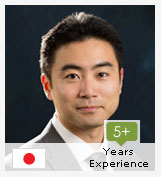
Translator Tc131
Academic experience backed by strong professional experience, this translator has vast experience in the field of biochemistry and molecular biology. He has more than 8 years of translation experience. He is an American English native and is fluent in English, Japanese and other languages like Mandarin Chinese, Spanish, and German. He is proficient in Japanese to English translation and checking.

Translator T630
This translator has had a long and illustrious career. She has more than 10 years of experience as a consultant to various hospitals and healthcare facilities across Asia in addition to more than 5 years of experience in echocardiographic examination. She is a Japanese native and currently resides in South Africa.

Translator PT29
This translator is a Pharm.D. in Pharmacy and Biochemistry from University of Sao Paulo and has more than 10 years of translation experience. He is a member of the Society for Clinical Data Management and is currently a Clinical Data Quality Manager at Bristol-Myers Squibb, Brazil. He has advanced knowledge of clinical operations, data management, budget and contracts, SAE/eSAE processing, management and monitoring of clinical trials, onsite monitoring, vendor management, Phase IIV clinical development, post-marketing trials, regulatory compliance, clinical pharmacology, medical writing, drug supply, and IVRS processes.
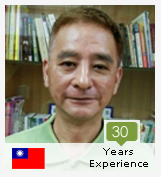
Translator TW158
He is a translator specializing in Homeopathy, Naturopathy, Nutritional-based Therapies, Health Information Manage-ment, Healthcare,Economics, Hospital Management, Public Health Management, Allergology, History of Medicine, Pulmonology Medicine, Family Nursing, Geriatric Nursing, and more. Heobtained his pharmacy degree from the Kaohsiung Medical University in Taiwan. He also has a Master’s degree from the Texas State University. His work expertise reaches close to 30 years in translating.

Translator TW177
With a master’s degree in Preventive Veterinary Medicine, this licenced Veterinarian has worked for over 10 years in the translation industry. She holds 16 years of total expereince in various industries across Taiwan and US. She is a skilled professional in subjects like Neurology, Oncology, Ophthalmology, Orthopedics, Veterinary Medicine, Anatomical/Surgical Pathology, Clinical Pathology/Anatomical Pathology, Orthopedic Surgery, Pharmaceutical Toxicology, etc.

Editor MB208
This editor has over 38 years of experience in writing and editing scientific documents, including original peer-reviewed research papers, book chapters and technical articles. He has authored and reviewed papers published in high impact journals such as Proceedings of the National Academy of Science (USA), the Journal of Virology, Virology, the Journal of the National Cancer Institute, Cancer Research, and Oncogene. He has received two awards: “Federal Technology Transfer Award” from the National Cancer Institute, USA and “Director’s Award” from the National Institutes of Health, USA.
The linguistic diversity in India has given rise to the need for specialized Indian language translation service. Ulatus offers skilled translators, with proven proficiency in English, who are native speakers of a wide range of important Indian dialects.
Hindi has 480+ million native speakers, making it one of the most commonly spoken languages in the world! Ulatus delivers certified English to Hindi translations for various industries such as academic, legal, finance, e-commerce, and plenty more.
The best way to get the exact price for your Indian language translation is to fill up our quotation form. Once you fill it, we will send you a free estimate within 1 hour.
Ulatus’ Indian language translation projects are produced by professionally qualified linguists and subject-matter experts who translate exclusively into their native language.
Tell us more about your project, and we’ll send you a free estimate within 1 hour.
We have successfully received your request and will get back with a confirmation shortly.






New Jersey, USA
3525 Quakerbridge Road Suite 6600 Hamilton, NJ 08619-1205
: +1-980-294-0831
: business@ulatus.com
New Jersey, USA
8 Lombardy St #41234, Newark, NJ, 07102
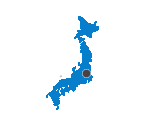
Tokyo, Japan
Crimson Interactive K.K., 4th Daini-Denpa Building, 2-14-10 Soto-Kanda, Chiyoda-ku, Tokyo, 101-0021, Japan
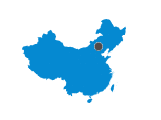
Beijing, China
Room 502, Fuhai Centre Building 2; No. 15, Daliushu Road, Haidian District; Beijing 100036
Mumbai, India
1001, 10th Floor, Techniplex - II, Veer Savarkar Flyover, S. V. Road, Goregaon (W), Mumbai 400062, India