English
 翻訳会社
翻訳会社 tradução em papel
 empresa de traducción
 traduzione cartacea
 Papierübersetzung
 traduction papier
 papieren vertaling
 ترجمه مقاله
 แปลกระดาษ
 бумажный перевод
 ترجمة ورقية
 makale çeviri
 Tradutor de Artigos
 學術翻譯
學術翻譯 학술출판번역
 论文翻译
论文翻译




Interview
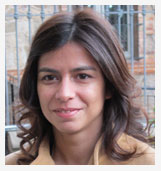
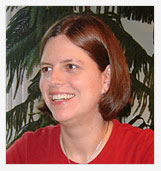
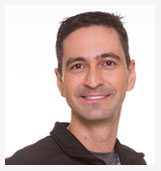
You have a PhD in Parasitology and have other very high qualifications. So, was becoming a translator always at the back of your mind while pursuing these courses, what is it that drew you into becoming a translator?
During my graduate studies, I worked independently as a translator/editor of scientific manuscripts. After the completion of my PhD, translating/editing came as an opportunity to have a flexible schedule and to be able to expand my knowledge in diverse life science topics.
It is very interesting to know that you chose English translation service as a career despite being a native Brazilian. Please tell me about your history and experience with the English language and do you think a person can be an expert in two such diverse languages?
I had the opportunity to live in the United States for three years, and in the first year I needed to study English diligently to successfully complete my senior High School year. After returning to Brazil, I worked as an English teacher for some years, and during my undergraduate studies in Biological Sciences, I attempted to improve my vocabulary by reading scientific literature in both Portuguese and English. Professionals can become literate in more than one language that is not their native language, but that often requires many years of practice and continuous reading/writing in the target language.
How do you keep yourself updated with the recent developments in the industry and the subjects you translate, and at the same time maintain and improve your English language skills?
I read relevant material, including scientific papers, from different areas of expertise. In addition, working on the translation and editing assignments demands continuous research on different Life Science-related topics.
Could you tell me about your areas of specialization?
I specialize in Biochemistry, Biosciences, Genetics, Microbiology, Zoology, Medicine and Health Management.
How do you approach a manuscript translation? What are the essential attributes you think every professional translator must possess?
Initially, the manuscript is read in its entirety to get a glimpse of the objective, main results, and the authors' writing style. Translators should pay special attention to detail and terminology, and I often give special emphasis to text flow, considering that the Portuguese language has many subordinate clauses, which need to be adequately restructured in the target language, for clarity.
Have you translated papers from outside of your areas of expertise? If yes, how have you decided on the selection and usage of technical terms for such assignments?
I had the opportunity to translate a few manuscripts on botany and nanotechnology. For most assignments, the references provided are a good starting point to make translators familiar with terminology, in addition to reading papers previously written by research groups working on similar topics.
According to you, is there a difference between the translation of academic and non-academic papers? Do you have different approaches for each?
When translating literary work, translators can focus on a more literal translation and attempt to be as close to the original as possible. For academic publications, improving readability may be more important at times, considering the need to capture the attention of increasingly busy scientists.
Could you give us an example of an assignment that challenged your skills as a translator?
It was an assignment on nanotechnology, which demanded a lot of research and dedication to convey all the information clearly and accurately.