
CAT tools or Computer Assisted Translation tools, as the name suggests, are computer programs used to facilitate the process of translation. These can help improve the quality and the quantum of a translator’s output, besides enabling improved collaboration on group projects as well as translation analysis. For overworked translators or those looking to deal with more projects within a given time-span, these tools can often be a godsend.
CAT tools run on translation memories, meaning they rely on a database which stores often-used phrases or sentences along with their translated equivalents. Given a document to translate, these tools will scan the text for these frequently used word combos and instantly give you an accurate translation at the click of a button.
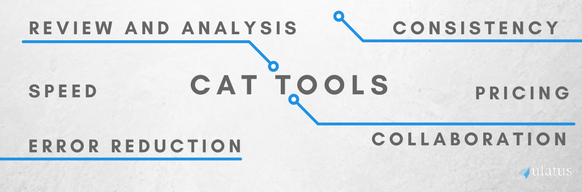
Here are some critical ways using CAT tools can help improve your productivity as a translator:
- Speed
For pure speed, CAT tools can’t be beaten. As a translator, while you may not choose to run with that raw output as is, it will still have saved you an incredible amount of time by giving you a base translation of the entire text, giving you a foundation to improve upon.
- Error Reduction
Another plus with translation tools is they’re designed to be thorough. You can avoid errors like skipped words or lines in your translation.
- Consistency
When you use a CAT tool, you ensure that the exact same translation is applied to a particular set of words or a phrase repeated throughout the document. While this may seem to not be as critical to quality, it’s important to remember that it might create a dissonance for your client, who isn’t as well-versed with the target language as you are and may look at discrepancies suspiciously.
- Collaboration
When there are multiple translators working on the same project, these tools ensure that everyone’s working off the same vocabulary-set. This makes sure that the final translation appears uniform and consistent. Also, a common interface makes it easy for colleagues to input and cross-contribute throughout the project.
- Review and Analysis
The review process is a cinch with CAT tools. It’s so much easier to compare your translated output to the source text when both versions are present side-by-side on your screen. These are exactly the kind of efficiencies that add up to make a significant difference to your productivity over a length of time.
- Pricing
Finally, it’s also that much easier to calculate the price for a particular project using translation tools. They are able to thoroughly scan and analyze a document to help you charge a reasonable sum for your services.
Now that we’ve familiarized ourselves with the advantages of using computer software for translation, let’s take a minute to have a look at the various options in the market. There’s an absolute abundance of CAT tools available out there, and it’s easy to feel lost. We’ve curated a list of some useful ones for you, within different categories:
Free CAT Tools
Yes, there are some effective free-to-use tools available as well. These are ideal for freelancers who’ve just begun their trade and still finding their way around these tools.
- OmegaT
- MateCat
- SmartCAT
Fee-based Tools
Paying a nominal fee to use some of these tools gives you access to additional features, helping you greatly improve your productivity
- Fluency Now
- Wordfast
- Swordfish
Online Tools
Web-based tools have the unparalleled advantage of allowing you to work on your project from anywhere in the world. Some of these are becoming increasingly popular amongst the freelancer community:
- Wordbee
- Transifex
Finally, a discussion on CAT tools is incomplete without discussing some of the most popular tools in the market, including SDL Trados Studio, MemoQ and Linguee. If you’re just making your way into the industry, it’s best to begin experimenting with some of the free ones to familiarize yourself with the basic interfaces and see what works for you. Once you’ve found a system you’re comfortable with and are convinced of the value it adds for your business or practice, you can begin to work with paid tools as well.