There are two critical elements you must understand when translating a document, and they cannot be stated too many times:
- A translated document should read as if it were written in the target language. If it can be identified as a translated document, your translator did not give you 100 percent.
- If a translated document looks terrible, nobody will pay attention to the exceptional quality of the translation. How your document looks is just as important as the content.
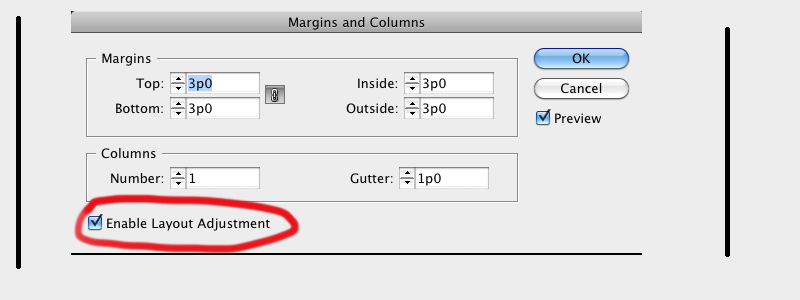
When articles are submitted to translators in the source text, all of the text, graphics, graphs, and so forth are well aligned within the margins. The text fits well on the page, line orphans are eliminated, and pages that are supposed to be across from each other are well in order. When documents are translated, however, the text length is rarely the same as it was in the source document.
Translated word lengths are usually different, single words may be translated into phrases, concepts may explained in a single word, acronyms may need to be spelled out or explained, and so forth. Depending on the language pair, the text may expand or be compressed up to 60 percent. Obviously, when the text length changes, so does the layout. Graphics may no longer be where they are supposed to be, page breaks are changed, text embedded on graphics may not fit into the text boxes, etc.
Special Formatting Considerations During Translation
When your document is comprised mainly of text, formatting can be easily adjusted. However, when tables, graphics, and charts are involved, things can be quite more complicated. When text expansion or compression moves the text, it also changes the position of embedded graphics. At the same time, if a graphic needs to be adjacent to or offset from specific text, the formatting must be adjusted to accommodate the new text length.
Leaving enough “white space” will save time on the formatting of expanded text. In the same way, if your target language has more compressed text, you will want to have enough text to keep the pages full.
- Graphs and tables with embedded text create special formatting issues if there is not enough space to translate the text. In academic texts with heavy chart and table usage, this can create a lot of extra work which takes time and money. If your project falls in this category, it is better to have more charts with plenty of room for textual expansion instead of highly compressed charts which will need to be completely reformatted.
- Pictures and Graphics with embedded text often have the same issues as charts and graphs. As the text expands or contracts, the text alignment is thrown off and the chart becomes too crowded to read or no longer makes sense based on the placement of the text. This can be avoided during writing if the target language is considered when placing the text on the graphic. If not, the translators can do the job, but it will take extra time to rework the text and graphic elements.
- Target languages that read right to left create a whole different set of formatting challenges. Some of these languages include Arabic, Farsi, and Urdu. Not only do the languages read in the opposite direction, but the books read from back to front (from the Western standpoint). Further complicating issues, none of these languages use the Latin alphabet but, instead, use a scripted character system that could use more vertical space than was planned for in the source document.
Overcoming Translation Formatting Challenges
When the look and feel of a document doesn’t isn’t essential, a simple machine translation may be just fine. This is rarely the case with professional or academic texts and papers. Within these documents, spaces, page breaks, and other alignment issues could make the difference between approval and rejection, success and failure, or acclaim and debasement.
The translation of academic texts, professional papers, and legal documents requires much more than changing words from one language to another. The intent of the text must be preserved, cultural sensitivities and nuances must be accommodated, lexical ambiguities must be properly localized, and formatting must be adjusted to an exacting standard.
To minimize issues with translation formatting issues, ensure your translators have native-level fluency in both the source and target languages, have a current cultural understanding of the language and localized region, a field-specific knowledge of the text, and full comprehension of the legal and professional formatting standards required on the project.