
Back in 2009, HSBC’s tagline “Assume Nothing” got mistranslated into “Do Nothing” across several markets, and fixing the mess reportedly cost the bank around $10 million. One word, one wrong service, one expensive lesson: translation, transliteration, and transcreation are three separate disciplines, priced differently, staffed differently, and definitely not interchangeable.
Quick definitions you can quote
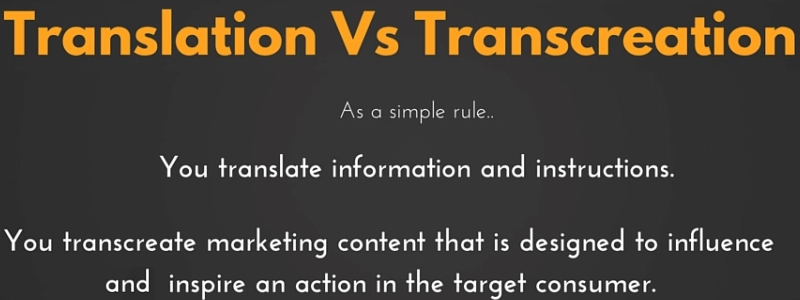
A translation service renders a sentence’s meaning faithfully in another language. Transliteration works differently: it maps a word’s sound into another script, so “Ramesh” becomes “रमेश” in Devanagari, with no attempt to translate what the name actually means. Transcreation goes further still, rebuilding a marketing message from scratch in the target culture so it lands with the same emotional punch, even if the final wording barely resembles the source.
Why people confuse these three terms
All three sit under the same “language services” umbrella, and vendors often sell them side by side, so buyers naturally start treating them like tiers of one product. They’re not. Translation preserves meaning, transliteration preserves sound, transcreation preserves feeling. Mix them up and that’s exactly how brand names get mangled, legal documents get rejected, and campaigns land flat in a new market.
What Is Translation? A Clear Definition and Example
Translation converts written or spoken content from a source language into a target language while keeping the original meaning intact. It’s the most literal of the three services, and probably the one you picture first when someone says “translation service.”
How a translation service works
A professional translator, or increasingly an AI engine with a human reviewing behind it, reads the source, understands it in context, and produces an equivalent text in the target language. The goal here is accuracy, not creative flair. Think about a user manual, a contract, or a medical report: precision matters far more than persuasion.
When translation alone is the right choice
Translation alone works best for legal contracts, technical documentation, financial statements, and internal communications, basically anywhere factual accuracy outranks emotional resonance. If your content just needs to say the same thing in another language without losing precision, straight translation is the right call, and the cheapest one too.
What Is Transliteration? A Clear Definition and Example
Transliteration converts the sounds of one script into the letters or characters of another without translating meaning at all. It’s about how a word sounds, not what it means.
How a transliteration service works
A transliteration service maps sounds from the source script onto the closest equivalent characters in the target script. That matters most for brand names, personal names, and place names, where actually translating the meaning would be nonsensical, or worse, damaging. Mercedes-Benz is the classic example: sources disagree on the exact original characters, though most cite “笨死” (bèn sǐ), roughly “very stupid,” before the brand settled on “奔驰” (benchi), which sounds similar and means “run quickly.”
When transliteration alone is the right choice
Transliteration alone is the right call for brand, product, and personal names entering a market that uses a different script. In China and the Gulf Cooperation Council states especially, IP counsel commonly recommends registering a local-script version of a brand name alongside the Latin one as part of trademark and commercial registration, though that’s practice guidance rather than an actual legal requirement written into statute. One SEO caveat: translate keywords into how people actually search rather than transliterating them mechanically, since search behavior rarely mirrors a direct script conversion.
What Is Transcreation? A Clear Definition and Example
Transcreation travels the furthest from the source text of all three. It rebuilds a message’s tone, humor, emotional pull, and cultural relevance for a new audience, sometimes rewriting the content almost entirely in the process.
How a transcreation service works
A transcreation service pairs a bilingual creative copywriter with deep knowledge of the target market. Instead of translating word for word, that writer starts from the original message’s intent and rebuilds it so it lands the way the source did for its first audience. That’s exactly why transcreation gets billed and staffed like copywriting, not like translation.
When transcreation alone is the right choice
Transcreation alone is the right choice for advertising slogans, brand taglines, and campaign creative, basically anywhere emotional impact matters more than literal wording. Take an example published by Smartling in 2026: Rajan Ad, CEO of the agency DbdPost, described a global fashion brand client (unnamed in the write-up) whose tagline “Fashion For All” simply wasn’t landing with Japanese consumers. DbdPost’s transcreation process replaced it with “Fashion for Every Moment,” a line Ad said “conveyed the same sentiment, but in a way that was culturally relevant.” The client reportedly saw a notable lift in engagement and conversion afterward, though no exact percentage was ever disclosed publicly.
Why no single competitor article compares all three at once
Most vendors specialize in one or two of these services, so naturally their content emphasizes whatever they’re selling. Here’s a useful test when you’re shopping for a language partner: ask whether they treat all three as serious disciplines, or whether one of them is clearly an afterthought.
How to Choose: A Decision Framework for Your Content
Here’s the part most existing guides skip entirely: a scored process that turns “which service do I need?” into something you can actually repeat every time.
Step 1: Identify your content type
Start by naming what you’re actually converting. Legal, medical, and technical content points toward translation, brand names and personal identifiers point toward transliteration, while marketing copy, slogans, and campaign creative point toward transcreation.
Step 2: Score your brand risk and emotional stakes
Score the content 1 to 5 on three factors:
- Visibility: 1 = internal document, 5 = national campaign or homepage.
- Emotional load: 1 = pure information, 5 = the message only works if it makes someone feel something.
- Brand risk: 1 = a clumsy sentence is survivable, 5 = a clumsy sentence becomes a screenshot.
Add up the three scores. Land between 3 and 6, and straight translation will do. Score 7 to 11, and you’re looking at translation plus a cultural review pass, or transliteration if the item in question is a name. Anything from 12 to 15 means you need transcreation, so budget for it accordingly.
Step 3: Weigh audience literacy and script differences
If your target market uses a different script, say Mandarin, Arabic, Devanagari, or Japanese kana, transliteration becomes non-negotiable for names, even when everything else is translated or transcreated. Markets that share your source script, on the other hand, rarely need a standalone transliteration step at all.
Step 4: Match budget and timeline to the right service
Translation is the cheapest and fastest option per word, while transcreation costs three to four times more and takes longer, because it involves creative iteration and client sign-off. If budget or timeline is tight and your content scored low back in Step 2, just default to translation and save the transcreation budget for content that actually drives revenue.
Decision framework: which service fits which content type
- Legal contracts, technical manuals, financial reports → Translation
- Brand names, product names, domain names, personal names → Transliteration
- Ad campaigns, taglines, social creative, brand launches → Transcreation
- Website or app launch in a new script market → All three together
Real Cost and Timeline Ranges in 2026
Numbers beat vague claims. Here’s what each service actually costs right now.
What a translation service costs and how long it takes
Standard translation runs $0.08 to $0.30 per word in 2026, climbing toward $0.50 for rush or highly specialized legal and medical content, per PoliLingua and Smartling’s 2026 rate guides. A single translator handles roughly 1,500 to 2,500 words a day, so a 10,000-word document takes four to seven business days, plus rush fees of 25 to 50%. Machine-translation post-editing runs two to three times quicker, around $0.05 to $0.15 per word, but only works well on MT-friendly source content.
What a transliteration service costs and how long it takes
Transliteration doesn’t really have a published market rate of its own. Industry pricing guides tend to fold it into standard translation or localization per-word fees, since mapping sound to script is faster and more mechanical than full linguistic conversion. So treat it as riding along inside your translation budget rather than a separate line item on the invoice.
What a transcreation service costs and how long it takes
Transcreation is the most expensive of the three, running $0.25 to $1.00 or more per source word, $75 to $250-plus per hour, or $1,500 to $15,000 for a full campaign, because it’s staffed and billed like creative copywriting rather than translation. Turnaround takes longer too, since you’re looking at drafting, cultural review, and approval cycles instead of one straightforward translation pass.
When Brands Get It Wrong: Failure Examples From Each Category
These are still the most-cited cautionary tales in current industry coverage, even though the events themselves are old news by now. No verifiable brand failure of comparable scale has actually been publicly documented in 2025 or 2026 in any of the three categories, so treat what follows as illustrative history, not breaking news.
A translation failure and its cost
Back in 2009, HSBC’s “Assume Nothing” campaign became “Do Nothing” in several markets, forcing a rebrand to “The World’s Local Bank.” The fix is widely reported to have cost around $10 million, though that figure actually traces back to secondary retellings rather than any original financial disclosure from the bank itself.
A transliteration failure and its cost
Coca-Cola’s early Chinese transliteration attempts were reportedly read by some as “bite the wax tadpole” before the company settled on “可口可乐” (kěkǒukělè), meaning “delicious happiness.” Localization blogs repeat this story constantly, though linguists actually dispute a lot of its finer historical details.
A transcreation failure and its cost
Back in the 1990s, Orange UK’s slogan “The future’s bright, the future’s Orange” backfired hard when the company expanded into Northern Ireland, where the color orange carries strong political and religious associations. No dollar figure was ever attached to the fallout, but it’s still the textbook case for why creative messaging needs a cultural review before it travels anywhere new.
Can You Combine Translation, Transliteration, and Transcreation?
Yes, and honestly, most global launches require it. Roughly 74.1% of internet users are non-English speakers, while English itself accounts for only about 49.3% of content across the top 10 million websites, according to W3Techs tracking. So multi-market launches tend to need all three services running in parallel rather than one after another.
Hybrid workflows: when one project needs all three
A single product launch might need translation for the terms of service, transliteration for the product name, and transcreation for the launch campaign, all against the same deadline. Running these as one coordinated workflow instead of three separate vendor handoffs cuts both cost and the risk of your messaging turning out inconsistent.
Example: launching a product across a non-Latin script market
India shows what this looks like in practice. Peps Mattresses, in a campaign documented by Smartcat, built seven distinct ads across five Indian languages, each anchored in regionally specific sleep and family scenarios rather than one master ad translated five ways. That’s the transcreation leg. A foreign brand entering that market would pair it with translation for ingredient lists and legal disclaimers, plus transliteration of the brand name into Devanagari and other local scripts so shoppers can read and pronounce it correctly.
The Bottom Line
Run your next piece of content through this framework yourself: name the content type, score visibility, emotional load, and brand risk out of 15, check for script differences, then match your budget to the timeline. That’s what tells you whether you actually need a translation service, a transliteration service, a transcreation service, or all three at once.
Or skip the guesswork entirely. Send us one page of the content you’re about to take into a new market, and within a week we’ll tell you exactly which of the three it needs, what it should cost, and what it’ll cost you if you get it wrong.