Translation not paperwork is what makes or breaks most credential evaluations. One detail stands out early: WES notes documents are processed within 24–48 hours once the translation meets their standards. That timing only helps if your translation is flawless. Otherwise, delays pile up. Brutal.
Submitting to WES, ECE, or IQAS? Don’t let a weak translation undo years of study. My stance: for credential evaluations, certified beats everything.
What a Document Translation Service Actually Does
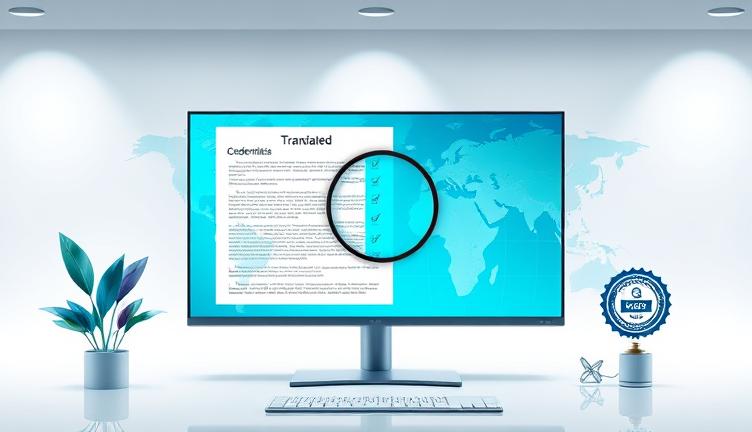
A Document Translation Service converts official academic records, diplomas, transcripts, certificates into another language while preserving accuracy, authenticity, and, when required, legal validity. That’s the difference between having your degree recognized and getting stalled by red tape.
Why Quality Translation Is Non‑Negotiable
- Equivalence determination: Evaluators rely on precise translations to interpret grading scales, course content, and institutional status.
- First‑impression factor: The translation reflects the quality of your education and your attention to detail.
- Rejection prevention: Both WES and IQAS report poor translation as a leading rejection cause.
Certified services that understand academic terminology and legal requirements are the safest path.
Agency‑Specific Rules for 2026: WES, ECE, IQAS
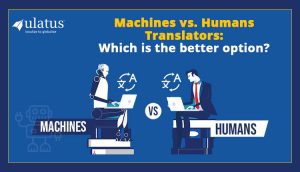
All three reject machine translations unless they’re certified by a recognized translator. Here’s what’s required:
| Agency | Required Format | Certification | Notes |
| WES | Electronic or paper with original | Certified with sworn statement | Documents processed within 24–48 hours once translation meets standards |
| ECE | Notarized translations | Must use standardized terminology | Emphasizes legal validation and exact academic terminology |
| IQAS | Digital uploads (all pages) | Certified notarized translations | No machine translations unless certified by recognized translator |
Certified vs. Professional vs. USCIS‑Approved Services
Know which service fits your goal:
Certified Document Translation Services
- Include sworn statements attesting to accuracy
- Provide notarization when required
- Carry legal recognition
- Preferred by WES, ECE, and IQAS
Professional Document Translation Services
- Offer subject‑matter expertise in academic terminology
- Often deliver faster (1–3 days)
- May not include notarization unless requested
- Useful for preliminary review, not always sufficient for submission
USCIS Document Translation Services
- Required for immigration‑related use
- Must meet USCIS certification statement requirements
- Relevant for Express Entry and similar pathways
- Often overlaps with certified translation needs
Counterpoint: A high‑quality professional (non‑notarized) translation can be fine for internal checks or early planning. For actual WES/ECE/IQAS submissions, certified (and sometimes notarized) translations are almost always required.
The No‑Rejection Checklist for Document Translation Services
Use this pre‑flight list before you submit:
1) Verify current agency guidelines
- Check WES, ECE, or IQAS sites for 2026 updates.
2) Get a certified translation with a sworn statement
- Choose providers experienced with academic documents.
3) Confirm translator qualifications meet agency criteria
- Verify membership, credentials, and experience with your target agency.
4) Match formatting requirements
- Side‑by‑side layout if requested, watermarks preserved, consistent page numbering and seals.
5) Cross‑check names and terms
- Identical spelling of names across all documents; consistent translations of course and degree titles.
6) Request native‑speaker QA
- Ask for a second linguist’s review focused on academic terminology.
7) Keep an itemized receipt
- Especially important if your process intersects with USCIS requirements.
How to Choose the Best Translation Provider for Evaluations
- Accreditation and certifications
- ATA membership
- ISO 17100 for translation services
- Agency‑specific experience or approval
- Customer feedback and turnaround guarantees
- Reviews referencing successful WES/ECE/IQAS outcomes
- SLAs with defined timelines
- Documented experience with your country’s education system
- Cost transparency
- Clear per‑page or per‑word pricing
- Line items for notarization, certifications, and expedited options
- Value weighed against rejection risk
Avoid These Common Pitfalls
- Date formats: Don’t mix DD/MM/YYYY and MM/DD/YYYY.
- Uncertified translators: Agencies that require certification will reject otherwise good work.
- Missing notarization: If required, lack of notarization triggers rejection.
- Inconsistent terminology: Keep course, degree, and institution names uniform across all files.
- Rushing the process: Build in time for QA and corrections. Ouch.
Post‑Submission: Tracking and Fixing Issues
- Track status in official portals
- WES: wes.org/portal
- IQAS: iccm.alberta.ca
- ECE: provider’s application system
- If rejected for translation issues
- Request the exact reason in writing
- Commission a higher‑quality certified translation addressing each point
- Submit an appeal/cover note explaining the fixes
- If immigration is involved, ensure USCIS‑compliant wording is included where needed
- Prevent future hiccups
- Keep digital copies of originals and translations
- Maintain contact with your translator for revisions or addenda
Quick FAQ
- Do WES, ECE, and IQAS accept machine translation?
No—unless the translation is certified by a recognized professional/agency. Plain machine output is rejected.
- Do I always need notarization?
Not always, but ECE and IQAS frequently require notarized, certified translations. Check the latest agency page before ordering.
- How fast should I expect delivery?
Professional services often deliver in 1–3 days; certified/notarized work can take longer. Expedited options exist at a premium.
- Will a professional (non‑certified) translation work?
Useful for planning or internal review. For submission, certified translations are typically required.
- What proof should I keep?
Itemized invoice/receipt, translator certification statement, notarization page, and digital copies of all files.
Conclusion: Stay Ahead in 2026
A quality Document Translation Service is your best defense against rejection. Follow the current rules for WES, ECE, and IQAS, insist on properly certified translations, and check every detail before you upload. Requirements evolve yearly, working with specialists in academic credentials protects your time, money, and momentum.
Get Started Today
- Speak with a certified translator who regularly handles WES/ECE/IQAS cases.
- Request a free, itemized estimate for your academic documents.
- Submit only after certification/notarization and a final native‑speaker QA.
Need help? Our network of certified and professional document translation services can navigate WES, ECE, and IQAS requirements and keep your evaluation on track. Sources: WES resources, IQAS required documents, and related guidance.