Picture a single Japanese sentence that drops its subject, switches honorific registers halfway through, and blends three writing systems, and a translator still has to land on one correct English meaning. That’s the everyday reality behind Japanese translation challenges, and most guides stop at grammar and idiom. This one doesn’t. It walks through the eight biggest obstacles translators and businesses actually run into, then makes a case most competing articles skip: medical translation and interpretation is where getting it wrong stops being embarrassing and starts being dangerous. Get it wrong here, and it can cost a patient their correct diagnosis.
Three Writing Systems Collide: Kanji, Hiragana, and Katakana
Japanese uses three scripts inside a single sentence, and it’s not an accident of history, it’s by design. Each script carries its own grammatical job, so before a translator can even decide what a sentence means, they first have to work out which script is doing what.
What Each Script Is Actually For
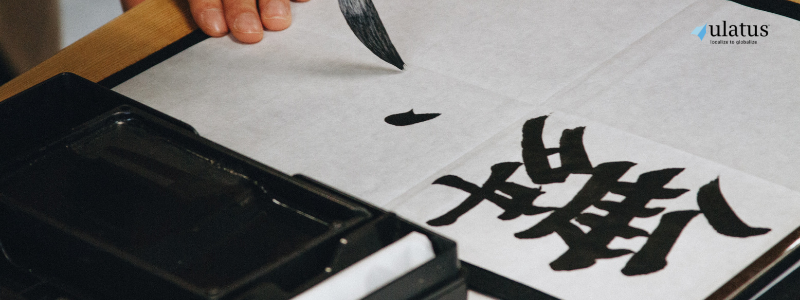
Kanji carries the content meaning, the nouns and stems of verbs and adjectives, while hiragana handles the grammar: particles, verb endings, connective tissue. Katakana is reserved mostly for loanwords and emphasis, roughly the way italics work in English. The government-designated jōyō kanji list used in schools and official documents contains exactly 2,136 characters, fixed by a 2010 revision and unchanged since. Hiragana and katakana each add 46 base characters, so a translator is constantly parsing which script signals which grammatical role.
Why Mixing Scripts Mid-Sentence Trips Up Translators
Switching scripts mid-sentence changes tone the way switching fonts might change emphasis in English, except here the shift also alters formality and meaning. Write a word in katakana instead of its standard kanji form, and you can signal sarcasm, technical jargon, or foreignness, all without changing the word itself. Miss that shift as a translator, and you flatten a tone that any native reader would catch instantly.
Keigo and Honorifics: Grammar Built on Social Hierarchy
Keigo builds social hierarchy directly into Japanese grammar, not just into word choice. That’s why getting the politeness register wrong isn’t a stylistic slip, it’s a substantive error.
The Three Levels of Japanese Politeness
Keigo comes in three registers: sonkeigo elevates the listener or a third party, kenjougo humbles the speaker, and teineigo covers general politeness. None of these is optional, and none blends freely with the others. Each has its own verb conjugations and vocabulary, so whichever register you pick commits the entire sentence to it. Business Japanese guides don’t treat keigo fluency as some advanced flourish, either, they treat it as a baseline professional competency.
Why Getting Keigo Wrong Damages Business Relationships
A mistranslated honorific in a formal proposal can undercut trust before your Japanese counterpart even reads past the first paragraph, however accurate the rest of the document is. Choosing the wrong register is the grammatical equivalent of addressing your CEO the way you’d address a close friend. Machines are no safer here: a 2026 industry comparison of Japanese translation tools found GPT-4o scoring just 0.29 accuracy on negative-question keigo structures, the weakest pattern it documented. Treat that as a directional signal from one publisher rather than a controlled benchmark.
Context-Dependent Meaning: Missing Subjects, Pronouns, and Plurals
Japanese routinely leaves out information that English simply requires, which means a translator has to reconstruct subjects, pronouns, and quantities from context alone, before they’ve even written a word of English.
Why Japanese Sentences Can Omit the Subject Entirely
Japanese grammar treats a stated subject as unnecessary whenever context makes it recoverable, something linguists call argument ellipsis. In 2024, corpus analysis (still the most recent measurement of its kind) found that roughly 37% of arguments, meaning subjects and objects, get dropped in Japanese text. That figure still holds as the working number, since argument ellipsis is a stable grammatical feature rather than something that shifts year to year. English has no real equivalent, which is exactly what makes this one of the most distinctive Japanese translation challenges out there.
Plurals and Quantity Are Ambiguous Too
Japanese nouns generally don’t mark singular versus plural, so “the book” and “the books” can look identical, leaving quantity to context or an explicit counter word. Add that to dropped subjects, and a single short sentence can carry several layers of implicit information at once.
How Translators Reconstruct Meaning From Context
Professional translators handle this through discourse tracking: reading several sentences on either side of the ambiguous one, noting social relationship cues, and applying domain knowledge about what’s plausible. Machine translation tends to be weakest exactly here. Research on zero-pronoun translation, published in 2021 and not superseded since, found neural models must infer the referent from surrounding text and still return output that can’t be resolved when context is thin, a limitation still showing up in current systems.
Idioms and Non-Literal Expressions: The Japanese Translation Challenge That Fails in Public
Non-literal expressions carry meaning that word-for-word translation just destroys, and because brand and marketing content is public by nature, this is the challenge that fails where everyone can see it happen.
Real Brand Translation Failures and What Caused Them
The classic illustration here, worth treating as a well-known cautionary tale rather than a recent headline, is Mazda naming a vehicle “Laputa,” borrowed from Gulliver’s Travels and later Studio Ghibli. In Spanish, it reads as “la puta,” a vulgar term. Translation risk doesn’t stay confined to your target language, either. A name can collide with any language it passes through.
What Causes Most Localization Failures Today
The measurable version of this problem is procedural, not anecdotal. Industry analysis of global advertising mishaps traced an estimated 30% of 2024 localization failures directly to over-reliance on unreviewed AI or machine translation output, still the most recent published estimate available. It matters more than any single viral gaffe, because the dominant failure mode has shifted from occasional bad naming decisions to something more systemic: a gap in human review.
Industry-Specific Technical Terminology
Bilingual fluency alone can’t translate Japanese legal, financial, or engineering content accurately. Those fields combine dense sector terminology with formal, indirect conventions that carry implied legal meaning, and general fluency just doesn’t cover that.
Why Generalist Translators Struggle With Legal and Technical Japanese
The difficulty here isn’t vocabulary lookup. In Japanese contracts and specifications, meaning often sits in convention rather than the words themselves: deliberately indirect phrasing can carry a binding obligation, and an ordinary term can carry a narrow, defined meaning in a regulated context. A generalist can produce output that’s grammatically flawless and still miss the exact legal sense required, with nothing to flag the error.
How to Match Content to Domain Expertise
Industry guidance consistently recommends routing specialized content to translators with matching domain credentials: legal linguists for contracts, technical or clinical specialists for regulated material. That matters most in fast-moving areas like fintech and digital assets, where terminology shifts quickly enough that even experienced translators still check with subject-matter experts before finalizing anything.
The principle is simple: subject-matter expertise matters more than general language skill. And the highest stakes of all show up in the one field almost no other guide addresses: medicine.
The Highest-Stakes Japanese Translation Challenge: Medical Translation and Interpretation
Medical translation and interpretation carries patient-safety and regulatory consequences that no other Japanese translation challenge does. An error here can delay treatment or contribute to a misdiagnosis, not just embarrass a brand. It’s the gap that competing guides skip entirely, and it deserves its own category.
Why Medical Terminology Precision Is Non-Negotiable
A mistranslated dosage instruction, an ambiguous symptom description, or a dropped negation (“no history of” versus “history of”) can change a clinical decision outright. There’s simply no acceptable margin for creative interpretation in a medical record or a physician-patient exchange.
PMDA Requirements for Pharmacovigilance and Regulatory Documents
Japan’s Pharmaceuticals and Medical Devices Agency (PMDA) enforces an all-case surveillance requirement described as uniquely strict even by international standards. Manufacturers must track safety outcomes in every patient using certain new drugs, then report them in Japanese, in specific adverse-event documentation formats. Since May 2025, amendments to Japan’s PMD Act have added a revised conditional-approval framework and pediatric drug development plan obligations, increasing the volume and complexity of Japanese-language filings that need precise translation.
What Happens When Medical Interpretation Goes Wrong
The foundational research here is a 2012 pilot study of Japanese-English medical interpreters in simulated clinical scenarios, which documented five recurring error types: omission, false fluency, substitution, addition, and editorialization. No newer peer-reviewed study has replicated that taxonomy, so it still frames the risk: even trained interpreters make clinically meaningful errors without standardized certification. That risk compounds a bigger pattern: a 2025 nationwide analysis found cognitive factors behind over 90% of diagnostic error cases in Japan, with stroke, sepsis, and lung cancer behind most high-severity ones.
The State of Medical Interpreter Certification in Japan
Japan has no single national licensing exam for medical interpreters, but its certification system keeps building. Back in January 2021, the Japan Society for Healthcare Interpreting Studies (JSHIS) launched as the country’s first academic society dedicated to healthcare interpreting, and the Japan Medical Education Foundation has run its Medical Interpreter Skills Certification Test since the mid-2010s. JMIP (Japan Medical Service Accreditation for International Patients) adds another layer, requiring accredited hospitals to employ certified interpreters, provide multilingual signage, and train staff in cross-cultural communication. Demand keeps climbing: Japan drew a record 42.7 million international visitors in 2025, up 15.8% on 2024, entering a system where certified interpretation is still the exception, not the rule.
Where Machine Translation Still Fails Japanese
Machine translation works fine for casual Japanese content, but it’s not yet reliable for regulated, high-context, or medical material. Turns out the features that trip up human beginners still trip up machines too.
What Neural Machine Translation Gets Right
Neural engines handle straightforward, context-rich sentences fairly well these days, and DeepL in particular has a strong reputation on formal and business Japanese. One 2026 industry comparison rated DeepL 4.8 out of 5 for general Japanese accuracy and 4.5 for business documents, against 4.3 and 3.5 for ChatGPT. Those are one publisher’s ratings, not an independent benchmark, but the broader point holds for everyday text: these tools are genuinely useful.
Where MT Breaks Down: Context, Keigo, and Ambiguity
Peer-reviewed research is far more cautious about specialized content. A 2025 study in BMC Medical Informatics and Decision Making found that translating medical device adverse event terminology between English and Japanese remains its own engineering problem, needing specialized model tuning well beyond general-purpose MT. A separate 2025 benchmark of Japanese biomedical language models found high-quality Japanese medical evaluation data still scarce, with translation-based approaches tending to miss local clinical context and Japan-specific standards.
Vetting Subject-Matter Expertise: Choosing the Right Translation Partner
Choose a Japanese translation partner based on demonstrated subject-matter expertise, not bilingual fluency or price. Language skill and domain skill are separate competencies, and treating them as interchangeable is exactly how projects go wrong.
Questions to Ask Before Hiring a Japanese Translation Provider
Ask direct, verifiable questions before signing anything. Does the provider assign translators by subject matter, not just by language pair? Can they name the credentials relevant to your content, whether that’s legal, financial, technical, or medical? What’s their human review process for any AI-assisted step, given that unreviewed AI output was tied to roughly 30% of localization failures in 2024? And for medical or regulatory work, do they use translators familiar with PMDA documentation conventions or JMIP-aligned interpreter standards?
Why the Answers Matter More Than a Credential List
A useful model to borrow, even outside healthcare, is the JMIP approach: verifiable credentials, defined service standards, and accountability built into the vetting process rather than assumed from a resume. Any provider unwilling to answer these questions specifically is already telling you how they’ll handle your project once it gets complicated.
Conclusion: Japanese Translation Challenges Are Only Half the Problem
Kanji, keigo, dropped subjects, idioms, and technical terminology all make Japanese genuinely difficult, but each is solvable with the right expertise and enough context. What separates a manageable project from a dangerous one is what a mistake costs you. Medical translation and interpretation sit in their own category, where the same error that produces a mistranslated slogan can instead produce a missed diagnosis or a rejected regulatory filing.
So match the stakes of your content to the expertise of the people handling it. If you’re working on Japanese contracts, technical documentation, or market-facing brand copy, get a qualified specialist review before publication. And if your content is medical, clinical trial documentation, or patient-facing healthcare communication, don’t leave it to a generalist or an unreviewed AI tool. Talk to a certified Japanese medical translation specialist before your next high-stakes project goes out the door.