
The Growing Need for Medical Interpretation
The demand for medical interpretation is essential in providing equitable healthcare, as the number of individuals with limited English proficiency (LEP) rises. A 2000 Census in the U.S. documented 47 million individuals who primarily spoke a language other than English at home, with over half of them reporting difficulty speaking English “very well”.This language disparity poses a considerable obstacle to receiving adequate healthcare. In the United States, over 25 million people face challenges engaging with the healthcare system because of limited English proficiency. This can affect various aspects, ranging from understanding insurance benefits to effective communication with medical professionals. This language barrier has a direct correlation with lower quality of care, potentially resulting in adverse clinical results, prolonged hospital stays, and increased readmission rates. In addition, there is an associated cost of $ 1.7 billion related to language barriers in healthcare.
The Risks of Inadequate Interpretation: A Cascade of Harmful Consequences
When medical professionals and patients communicate in different languages, misinterpretations can arise, sometimes with detrimental consequences. Inadequate medical interpretation significantly threatens a patient’s safety, health, and overall well-being in multiple ways:
- Misdiagnoses and Treatment Errors: Medical diagnoses and treatment decisions are often based heavily on the patient’s provided history of present illness and medical history. When a patient’s ability to articulate symptoms or medical history is compromised, it increases the probability of misdiagnoses and, consequently, incorrect treatment. For example, a study highlighted a higher prevalence of adverse events among patients with limited English proficiency in hospital settings, sometimes involving detectable physical harm.
- Medication Errors: The lack of proper interpretation elevates the risk of LEP patients misinterpreting essential information regarding their medications. This includes dosage instructions, potential side effects, and drug interactions, ultimately placing them at risk for adverse drug reactions. One study revealed that 34.7% of patients with limited English proficiency were uncertain about how to administer their medications, while 41.8% had difficulties comprehending medication labels. Moreover, the study found that 15.8% of these patients experienced adverse reactions due to misunderstanding the instructions provided.
- Longer Hospital Stays and Readmissions: Some sources indicate that LEP patients tend to experience longer hospital stays and higher readmission rates compared to their English-speaking counterparts. This can be attributed, in part, to the challenges LEP patients face in understanding discharge instructions and medication regimens, leading to preventable complications and the need for subsequent medical intervention. These avoidable hospital visits contribute to increased healthcare costs and place a strain on the healthcare system.
- Decreased Patient Satisfaction and Trust: The inability to communicate effectively with healthcare providers can lead to misunderstandings and a diminished sense of trust. Patients with limited English proficiency often experience frustration and feel less involved in their own care when language barriers hinder communication. This can be particularly distressing for patients when discussing sensitive health matters.
These decreased health outcomes have implications that span many sectors:
- Legal: The failure to provide qualified language services, particularly the reliance on unqualified staff as interpreters, can constitute a violation of federal laws such as Title VI of the Civil Rights Act of 1964. This legislation mandates that any healthcare program receiving federal funding must provide meaningful language access to LEP individuals. Noncompliance can carry significant legal consequences for healthcare institutions.
- Ethical: From an ethical standpoint, neglecting to provide adequate interpretation services is considered a form of discrimination. This practice contradicts the essential principles of patient autonomy and informed consent, which are cornerstones of ethical healthcare. Every patient has the right to understand their medical care fully, enabling them to make informed decisions about their health.
- Medical Malpractice: Not providing medical interpreters or relying on unqualified interpreters considerably heightens the risk of medical errors. Misinterpretations, cultural misunderstandings, or omissions during critical medical conversations can have severe consequences for patients. If harm occurs due to such errors, it can give rise to malpractice lawsuits, exposing healthcare providers to legal liability. Engaging certified interpreters who adhere to a professional code of conduct is crucial in mitigating these risks.
- Informed Consent: The principle of informed consent dictates that patients must fully comprehend their diagnosis, treatment options, potential risks, and benefits before providing consent. LEP patients who receive information solely in a language they do not understand cannot genuinely give informed consent, jeopardizing their well-being and potentially exposing healthcare providers to legal repercussions.
Barriers to Effective Medical Interpretation: A Multifaceted Challenge
Despite the legal and ethical obligations to provide adequate interpretation services, several factors can prevent patients from receiving these vital services.
- Financial Constraints: Securing qualified interpreters can be expensive, posing a challenge for smaller hospitals and clinics with limited budgets. As a result, some healthcare facilities resort to using ad hoc interpreters, such as bilingual staff or family members, who may not possess the necessary training to interpret complex medical information accurately.
- Shortage of Qualified Interpreters: The lack of trained medical interpreters, particularly for less common languages, is a significant challenge across healthcare settings. Finding professionals proficient in both the required languages and medical terminology can be difficult. When access to qualified medical interpretation is not available timely or readily, patients and providers often rely on family members, friends, or staff to interpret for them. The use of these untrained individuals as interpreters can result in the misinterpretation or omission of up to 50% of crucial medical information, potentially jeopardizing patient safety. These ad hoc interpreters may lack the necessary medical vocabulary and knowledge, increasing the likelihood of errors that can have serious clinical implications.In fact, the US House of Representatives has recently passed the Supporting Patient Education and Knowledge (SPEAK) Act, or Bill HR 6033, which aims to improve telehealth language access to LEP patients to help combat this issue.
- Lack of Awareness and Training: A considerable gap exists in awareness and training among healthcare providers regarding the importance of language access for their patients. Many providers are not adequately informed about the legal requirements, best practices for collaborating with interpreters, or the ethical implications of not providing appropriate language services. In addition, many providers may not be aware of their LEP patients’ language abilities and may overestimate LEP patients’ English proficiency, and some patients may fear disclosing their limited English proficiency.
- Time Constraints: Time pressures in healthcare settings often lead providers to view working with interpreters as an additional burden on their already demanding schedules. However, neglecting to use an interpreter can result in misunderstandings and errors, ultimately requiring more time to rectify. In addition, the use of interpreters has shown to decrease missed appointments and treatments, leading to improved preventative healthcare delivery that ultimately saves time in the long term.
Solutions and Best Practices for Improving Medical Interpretation Globally: A Roadmap for Change
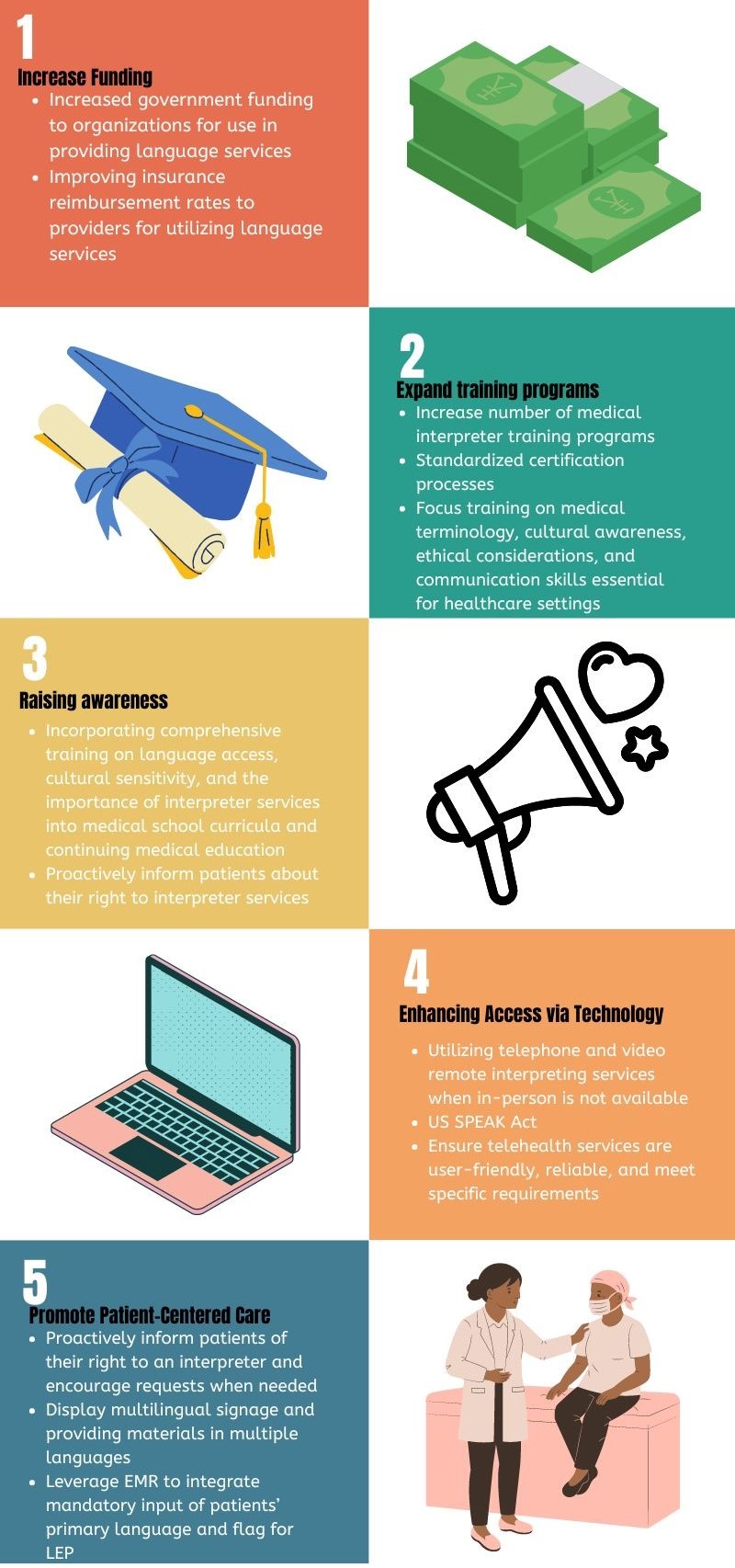
Improving language access in healthcare requires a collective effort from policymakers, healthcare institutions, individual providers, and language service organizations. Collaborative strategies are essential to ensure that language barriers do not impede access to quality healthcare.
How Ulatus Can Help:
Ulatus is a professional translation Company specializing in delivering tailored solutions for the healthcare industry, including:
- Medical Interpretation: Ulatus offers both on-site interpretation and online interpretation services performed by qualified medical interpreters. These professionals possess expertise in diverse medical specialties, ensuring clear and accurate communication between healthcare providers and LEP patients. Ulatus prioritizes cultural sensitivity and linguistic accuracy to bridge communication gaps effectively.
- Medical Translation: Recognizing the importance of providing medical information in a language patients can understand, Ulatus provides accurate and culturally appropriate translations of patient materials, medical records, informed consent forms, and other vital documents.
- Linguistic Validation: Ulatus assists healthcare institutions in adapting medical questionnaires, surveys, and research materials for diverse languages and cultural contexts. This process ensures that assessments are accurate, reliable, and culturally sensitive, contributing to more inclusive healthcare research and data collection.
By collaborating with language service providers like Ulatus, healthcare systems can work towards minimizing errors, improving patient safety, enhancing the overall quality of care, and creating a more equitable and patient-centered healthcare experience for LEP individuals.