
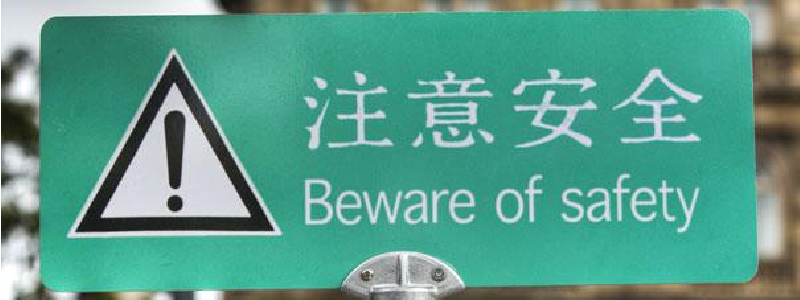
When Coca-Cola was first introduced to China, it was translated “Bite the wax tadpole” or “Female horse stuffed with wax”. It is said that the Coca-Cola company had researchers go through over 40,000 Chinese characters until they found a suitable phonetic match. They finally ended up with “kokoukole”, which means “Happiness in the Mouth”.
Proctor and Gamble ran into a similar situation when they promoted their Puffs tissues abroad. Sadly, the word “whorehouse” in German is “puff”.
When considering an international market expansion with your company, product, or book, did you ever stop to consider that the name or title may not translate well into a foreign language? If not, you might find yourself hoping for a quick re-branding before too many people notice your gaffe.
Granted, you would not be the first to fall victim to a name lost in translation, but it would be better to learn from other’s mistakes instead of repeating them.
For decades, Americans wondered why Brazilians laughed when somebody said they loved their Pinto, and Ford Motor Company wondered why Pintos were not selling in Brazil. After all, the Pinto was an iconic car. Had Ford checked with their translator, they would have understood their gaffe.
In Brazilian Portuguese, “Pinto” refers to tiny male genitals. Imagine the embarrassed blush on the VP’s face when he realized how many times he insisted to his Brazilian counterpart that he absolutely loved his Pinto, its pleasant shape, and the way it responded to his touch. He would have felt even worse when he realized that the Pinto’s greatest fail was that it exploded when hit in the rear end.
The Gerber company learned a lesson in packaging when they first introduced their baby food to Africa. Gerber is known for the cute baby face that adorns all of its products. What they did not realize was, because many people in the African markets have limited language skills, African packages typically featured a picture of what is inside the box or bottle.
It’s not just English that doesn’t translate well. Consider these products from abroad whose names would not inspire confidence for the American consumer.
- One of Ghana’s top soda brands is “Pee Cola”. Probably not the beverage you want to serve your future mother-in-law. Then again, it might be better than offering her a Macedonian “Vergina” pale lager.
- In Poland you can pick up a delicious “Fart Bar”, but you won’t likely find them in many American markets, for obvious reasons. Along those same lines, the Norwegians have a “draught beer,” labeled “Aass Fatol” which does not make the taste buds of English speakers tingle.
- A Vicks cough drop or throat lozenge seemed to be just the thing to market to the Germans who have such harsh winters and make those guttural back of the throat noises all day. Sadly, a “V” in German is pronounced as an “F” and “Ficks” pronounced gutturally in German is a rather vulgar sexual reference.
- Taking the top prize in this event nobody wants to win the extra-large bag of potato chips found in Finish KKK stores. The monster bags have the unfortunate name “Megapussi”.
While these examples are humorous, many of them cost the companies’ involved great sums of money and a loss of reputation. Some of them were able to overcome the blunders while others were not so fortunate. Others are not used in foreign markets to this day.
The Lesson To Be Learned
The lesson behind all these stories is that when marketing in another country, it is not just the information in your product manuals, presentation or book that is important. Nobody is even going to pick up or buy your product, book, or service if the name is offensive or ridiculous.
While you may have spent large amounts of time, money, and effort developing your brand, icons, and slogans, a re-branding for a foreign market may save you embarrassment, ridicule and vast sums of money.
This post is written by Robert Stitt, a content writer with Ulatus.