
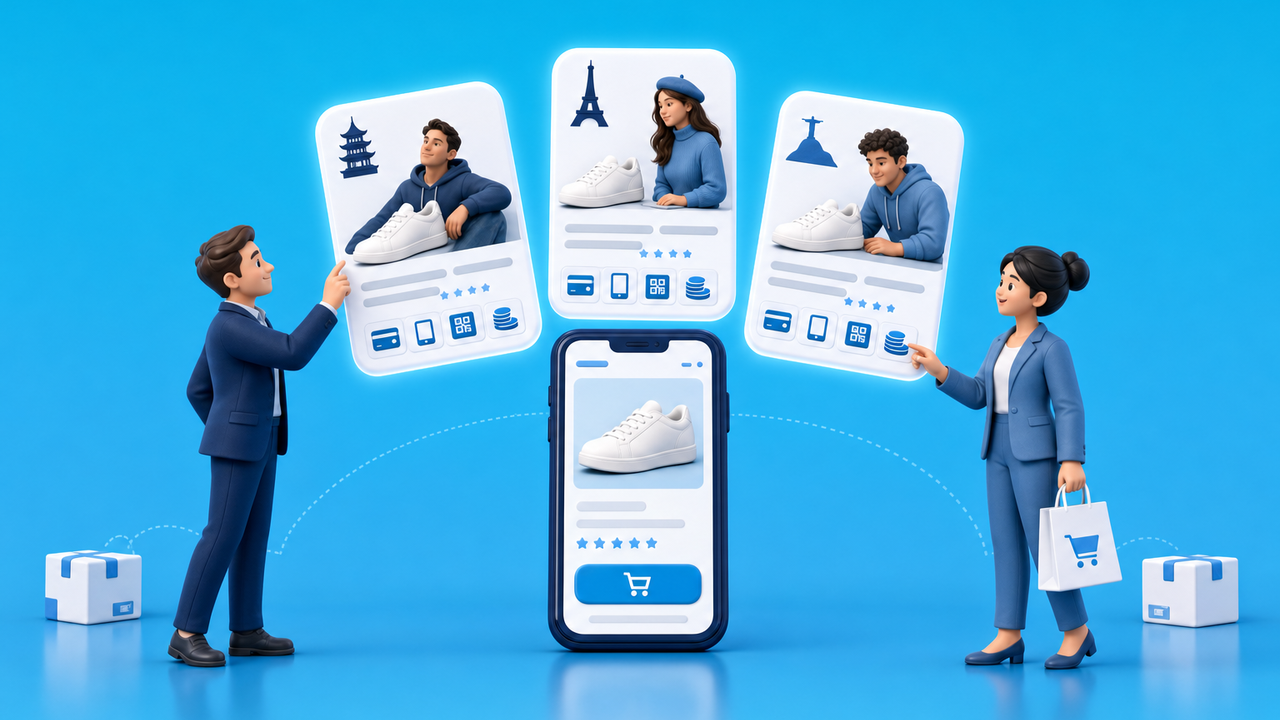
A multilingual eCommerce strategy used to be something only big brands bothered with. Now it is how anyone serious about growth reaches the rest of the world. Every move here comes back to one simple idea: make a shopper in Seoul or São Paulo feel like you built the place just for them, and they will reward you for it.
That is a lot to get right, and it is exactly what we are going to sort out here. We will show you why the multilingual eCommerce framework is worth it and the 8 tactics the big players use to approach localization as a real strategy. Plus the mistakes that can destroy the whole process.
Why A Multilingual eCommerce Strategy Pays Off: 4 Benefits
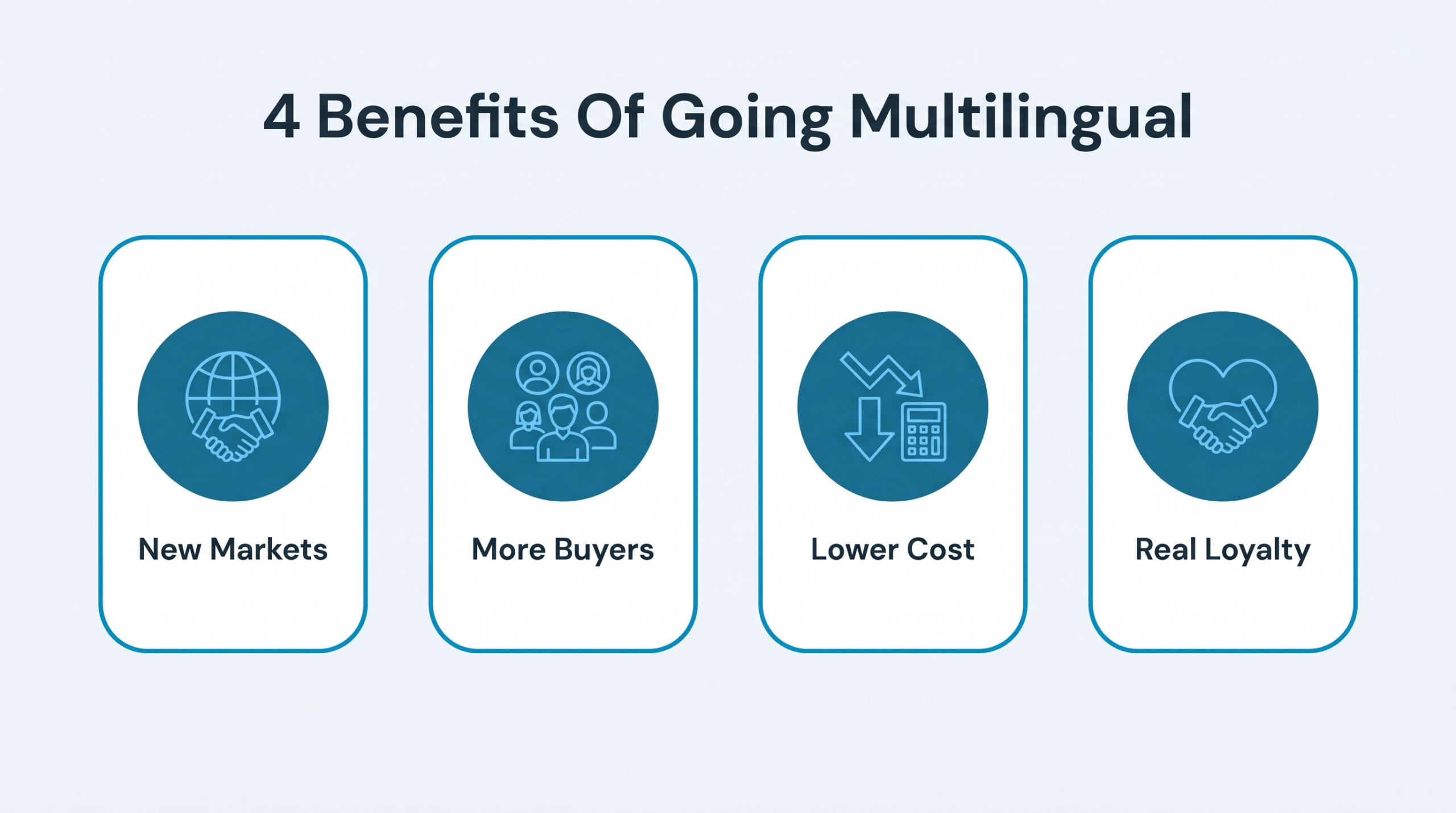
Before we get into the how, let’s talk about why any of this is worth your time. A multilingual eCommerce strategy isn’t a side project anymore. These 4 payoffs are the reason the big brands pour real money into it.
1. Opens Up Global Markets You Are Currently Invisible In
If your store only speaks English, most of the planet can’t really shop with you. Around 59% of global shoppers already buy from stores in other countries, so the appetite is obviously there. Start speaking their language, and you suddenly exist for global users your English-only competitors will never reach.
And here’s a bonus. In plenty of these markets, your rivals haven’t localized either. So a shopper searching in their own language finds a clumsy set of choices. Show up done properly, and you are usually the obvious pick, not just another option. That early search visibility can become a competitive advantage while other brands are still relying on English-only pages.
2. Turns Browsers Abroad Into Actual Buyers
Pulling people in is only half the job. They still have to feel safe enough to pay. And 60% of shoppers say they rarely or never buy from English-only sites. Even people who read English fine get twitchy handing over card details somewhere that doesn’t seem local to them. Their own language is what calms the nerves.
It is honestly not about whether they can read English. Many of them can. It is that spending money is emotional, and people relax when a page feels like home. That little bit of comfort is all it takes to tip someone from maybe into yes.
3. Lowers What You Spend To Win Each Customer
Localizing doesn’t just bring in more sales. It makes each one cheaper to win. A store that reads naturally in a local language earns organic traffic you would otherwise have to buy. Your ads perform better because the page finally matches what the click promised. So your cost per new customer drops in every market you do properly.
This one also builds on itself. Good localized content keeps getting free traffic months after you publish, while an ad stops the second you stop paying. So the gap between you and a rival still renting every click just keeps widening over time.
4. Builds Loyalty That Survives A Cheaper Rival
Price isn’t the only thing that keeps customers. Feeling understood matters just as much. When your emails and your support both arrive in someone’s own language, jumping to a cheaper competitor becomes a step down. That quiet comfort is a moat, and a discount can’t easily wash it away.
There is a nice knock-on effect too. People who are looked after talk, and they talk to others in their own community. In a fresh market, that kind of word of mouth is priceless because it comes pre-loaded with trust. One happy customer can give you 10 more.
8 Smart Tactics Behind A Successful Multilingual eCommerce Strategy That Works Across Markets
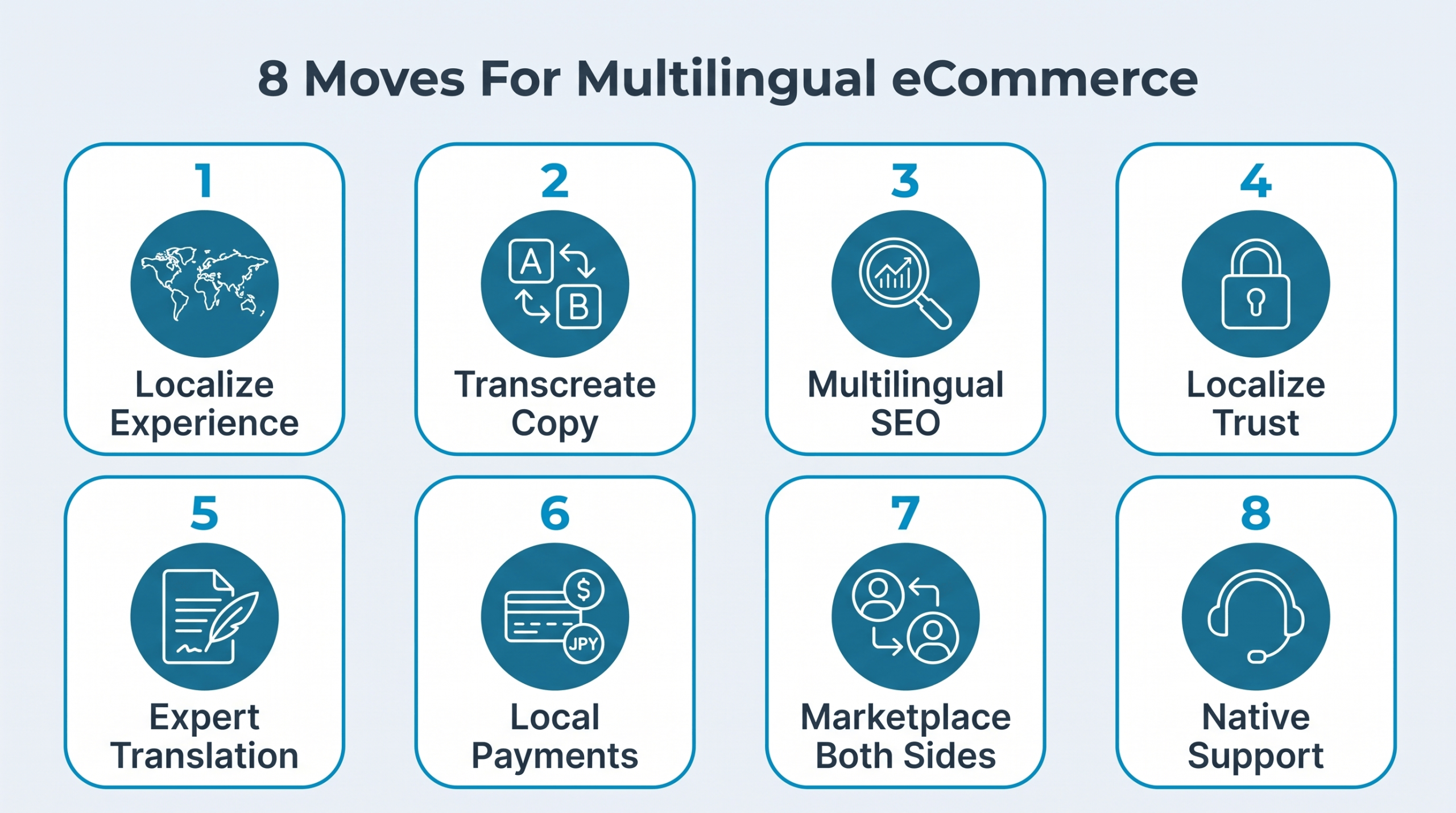
Okay, this is the part you actually came for. The international marketing strategy the top multilingual sites run is really 8 moves working together, each doing a different job.
1. Localize The Whole Experience, Not Just The Words
Most brands stop at translation. The sharp ones keep going. There is a real difference between swapping the words out and rebuilding how the whole store feels. The goal is not just that translated text reads correctly, but that the full buying experience feels local.
Currency and sizing shift by market. So do the date formats and even whether a joke works. Get the full experience right, and shoppers settle in. Translating a store this thoroughly can lift conversions by about 35% on average in non-English markets, and raw machine output alone rarely gets you all the way.
The small things have a surprisingly big impact here. A price in the wrong currency format shows that this store wasn’t built for them. So does a date written the American way. Those little mismatches add up into a vague feeling that something is not right, even when they can’t put a finger on it.
This whole-experience idea gets even trickier once a product is made to order. With custom apparel, a shopper isn’t just adding one thing to a cart. They are building an order, and every step has to make sense in their language, or they quit halfway.
Take this online custom compression sock store. An order there means picking youth or adult sizing and a knee-high or over-the-calf length. Then uploading a logo and clearing a 72-pair minimum. There is a mockup and a free sample to approve before anything ships.
Now imagine a company in Mexico or France trying to order. If the sizing only makes sense in US terms, that buyer stalls. The same happens when the mockup emails and approval steps all arrive in English. On a bulk custom order worth real money, one confusing step sends them looking elsewhere.
Here, localizing the whole path is the solution, not just the product page. That means local sizing and configuration steps a buyer can follow, right through to mockup approvals in their own language. For any made-to-order brand, localizing that full experience is where a multilingual eCommerce strategy wins or loses a big order.
- Convert prices to local currency and show taxes the way locals expect.
- Swap imagery and models to match each market’s culture and current season.
- Adjust the sizing and date formats to each market’s own local standard.
- Rewrite tone and humor so nothing is awkward or lost in translation.
2. Transcreate Product Content So It Still Sells
Copy that sells in English almost never sells word-for-word somewhere else. A literal translation squashes the persuasion and butchers the idioms that made it work. Transcreation rewrites the whole thing so it hits just as hard locally, even if barely a word survives.
A punchy tagline usually needs reinventing, not translating. Get the idioms and nuance wrong, and your sharpest copy turns to mush.
Some things just refuse to cross over. A pun or a joke built on a local holiday rarely survives the trip. A good transcreator doesn’t cling to the original wording. They find a fresh idea that does the same job for that specific audience.
- Rewrite each product description for persuasion, not just a literal word-for-word swap.
- Adapt taglines and slogans so they still look clever in each target language.
- Brief translators on your brand voice before they touch a single word.
- Test two versions of your key copy with real local shoppers first.
3. Do Real Multilingual SEO In Every Market
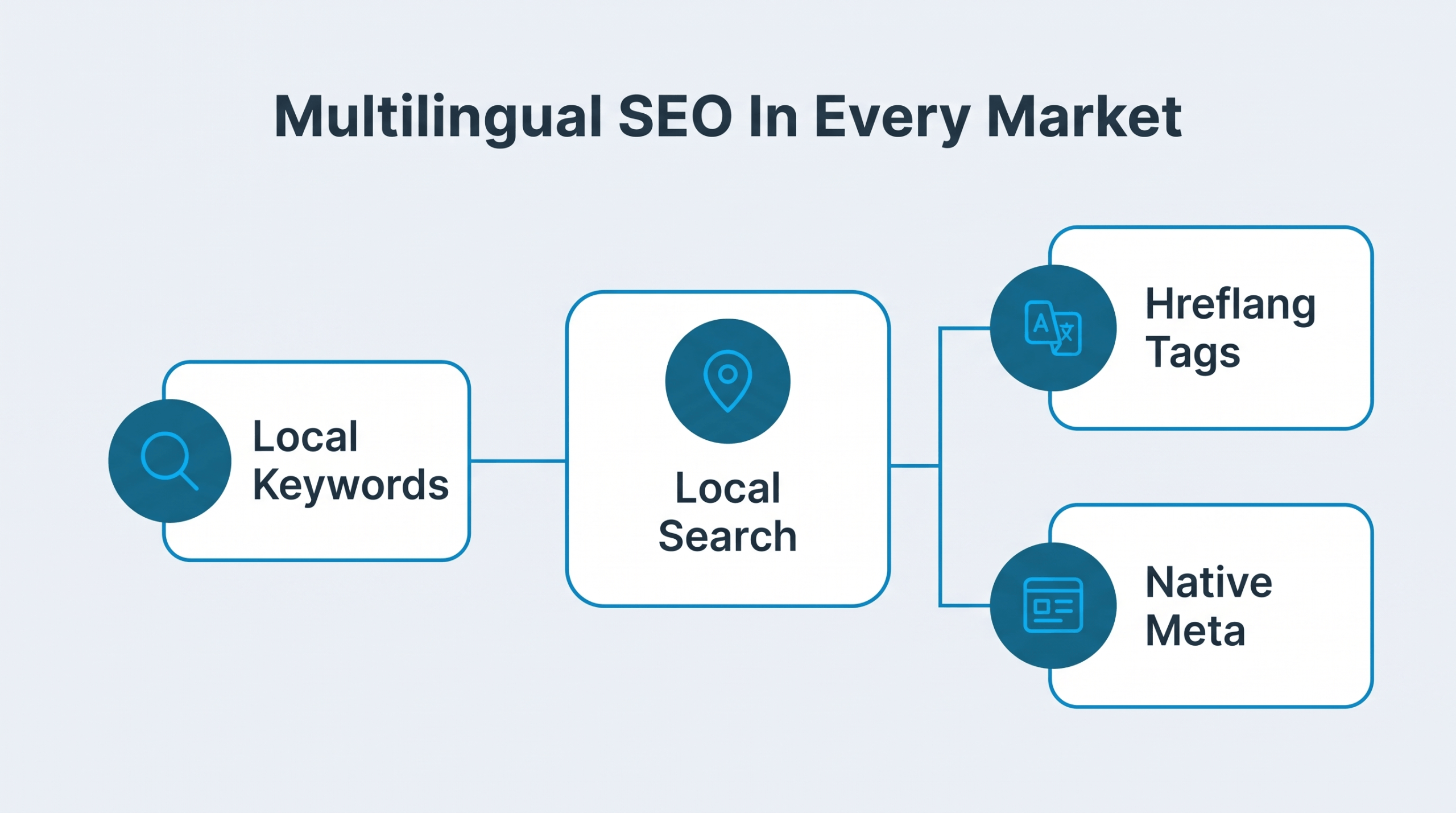
Getting translated and getting found are two different things. Internet users in each local market type their own words into search, and a straight translation of your English keywords usually passes them by. Proper international SEO helps you look into how locals actually search, then shape pages around those real phrases.
There is a technical side too, so search engines show the right language to the right person. Get the groundwork right, and multilingual SEO helps you even show up in AI search across languages.
Worth remembering, Google isn’t the only door everywhere. Shoppers in some countries start on completely different search engines and marketplaces. A real plan follows where global audiences actually begin their search, instead of just chasing Google in another language.
- Research the real search terms in each language, not your translated English keywords.
- Set up your hreflang tags so Google serves the correct language version.
- Localize the page titles and meta descriptions for every single target market.
- Build a separate keyword list for each country, never one shared list.
4. Localize Trust Signals For Big-Ticket Buyers
Some buys need way more hand-holding than others before anyone pays. The bigger the price or the risk, the harder a shopper leans on your proof.
That is your guarantees and your return terms, the elements that say you are safe to trust. When those signals are missing or awkwardly translated, doubt shows up at the exact wrong second.
Security is another part of the trust equation. People are not just worried about whether a product works. They are also thinking about what happens to their information once they hand it over. That concern is not unfounded. 63% of people have been a victim of cyber abuse at least once, so trust around data and online safety can be a major factor.
Trust does most of the work on any pricey purchase, and it goes into overdrive once you are asking someone to spend big on something they can’t hold first. The more it costs, the harder they search for proof before committing. So every reassuring detail on the page has to be just as solid in their language.
Look at this online diamond chain store where the products climb from a few thousand dollars past $80k. The whole page exists to calm nerves. There is a manufacturing warranty and shipping protection for lost parcels. And there is also financing spread across one to three years.
Now drop a buyer in Paris or Tokyo onto that page. If the warranty reads like rough machine output, a $30k order can die on the spot. The same happens when the financing terms turn complicated in their language. The doubt only has to be small.
What they would do is localize every one of those reassurances properly. Show reviews from buyers in that market and list the payment options locals already trust. On big-ticket goods, that trust layer is where a multilingual eCommerce strategy proves itself abroad.
- Translate your guarantee and returns policy with real care, not raw software.
- Show off reviews written by real customers based in each target market.
- Display the local trust badges and payment logos that people already recognize.
- Localize the shipping and delivery details so nothing important ever feels hidden.
5. Translate Technical And Regulated Content With Real Experts
There is a whole category of products where accuracy simply can’t be wrong. Every dosage and every legal claim has to be dead-on in every language you sell in. And the rules for what you are even allowed to say change as you cross borders. This is the one spot where being fast and cheap has to lose to being exactly, provably right.
- Only use translators with real subject expertise in your specific product field.
- Have a local expert check every claim against that country’s own rules.
- Never machine-translate the dosages or legal wording without a proper human review.
- Keep a per-market glossary of the approved terms and the banned phrases.
6. Offer Local Payments And A Familiar Checkout
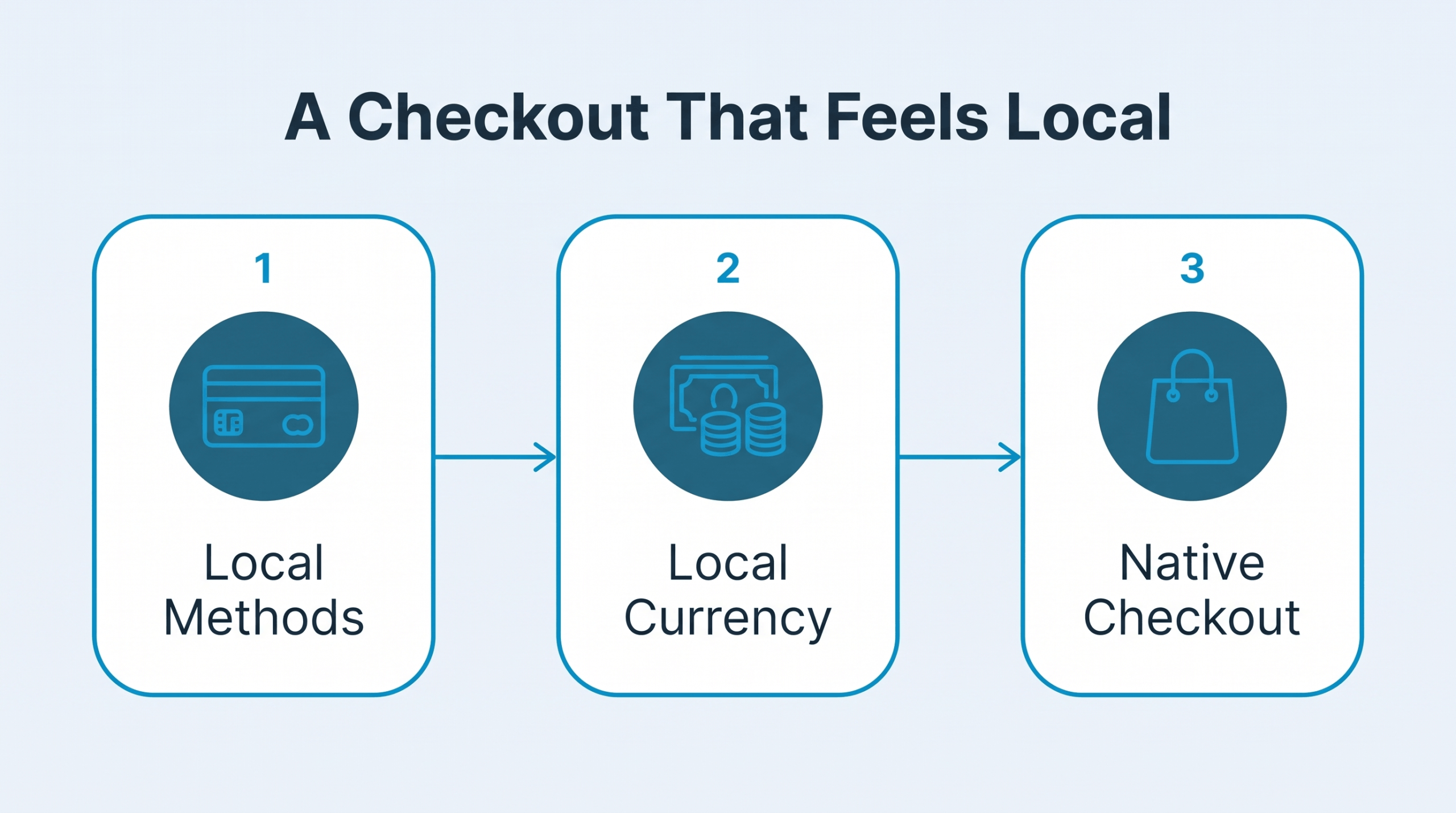
You can get everything else perfect and still fumble it at the very last step. Shoppers expect the payment methods they use every single day. A missing one flashes like a warning light.
Someone in Germany wants a different option than someone in Brazil. Show prices in a foreign currency, and you crack the trust you just built. Same goes for a checkout that suddenly reverts to English.
Payment habits change more than most international businesses realize. Some countries run heavily on installment plans, while others still lean on cash on delivery. Getting the mix wrong isn’t a minor miss. It is the exact reason a loaded cart gets abandoned at the final click.
- Offer the local payment methods that people in each market actually use.
- Show final prices in the local currency, including any applicable taxes upfront.
- Keep the entire checkout flow in the shopper’s chosen language the whole way.
- Localize the error prompts and confirmation emails, not just the cart page.
7. Localize Both Sides Of A Two-Sided Marketplace
Most localization advice assumes you own and control every word on the site. Plenty of eCommerce models don’t work that way at all. Marketplaces and any eCommerce site full of user-generated listings face a different beast entirely. The content is written by other people, and it never stops flowing. Two separate audiences both need serving at once.
You can see the challenge on a platform like this business listing marketplace where sellers post their own listings, and buyers look through them. Expanding into a new language means serving both sides at once. Sellers need the listing tools in their language. Buyers need every listing readable and searchable in theirs.
The problem is volume and freshness. New listings appear constantly, so you can’t hand-translate each one. Yet raw machine output from a tool like Google Translate can misrepresent a business people are spending real money on.
What they can do is build a workflow that machine-translates listings fast, then adds human review for the high-value ones. For any two-sided model, that dual localization is the most overlooked part of a multilingual strategy.
- Localize the seller tools and the buyer experience as two separate jobs.
- Machine-translate the high-volume listings fast, then review the valuable ones by hand.
- Let your users see and search every listing in their own language.
- Translate the reviews and the notes that build trust between both sides.
8. Support Shoppers In Their Own Native Language
The sale isn’t the end. What happens next decides whether they ever come back. A shopper with a question or a headache wants help in their own language, not a stiff English chat thread.
When support only works in English, a small hiccup becomes a reason to never return. Looking after people in their language is what turns one order into a regular habit.
Language isn’t the only wrinkle either. Time zones count just as much. A shopper 12 hours ahead can’t sit around waiting for your office to wake up, so localized self-service and help content cover them while your team sleeps.
- Offer real human support in every single language you actively sell in.
- Translate your whole help center and FAQ pages, not just live chat.
- Localize the return and refund instructions so they are truly impossible to misread.
- Route each customer to a support agent who speaks their own language.
3 Mistakes That Undermine A Multilingual eCommerce Strategy + How To Fix Them
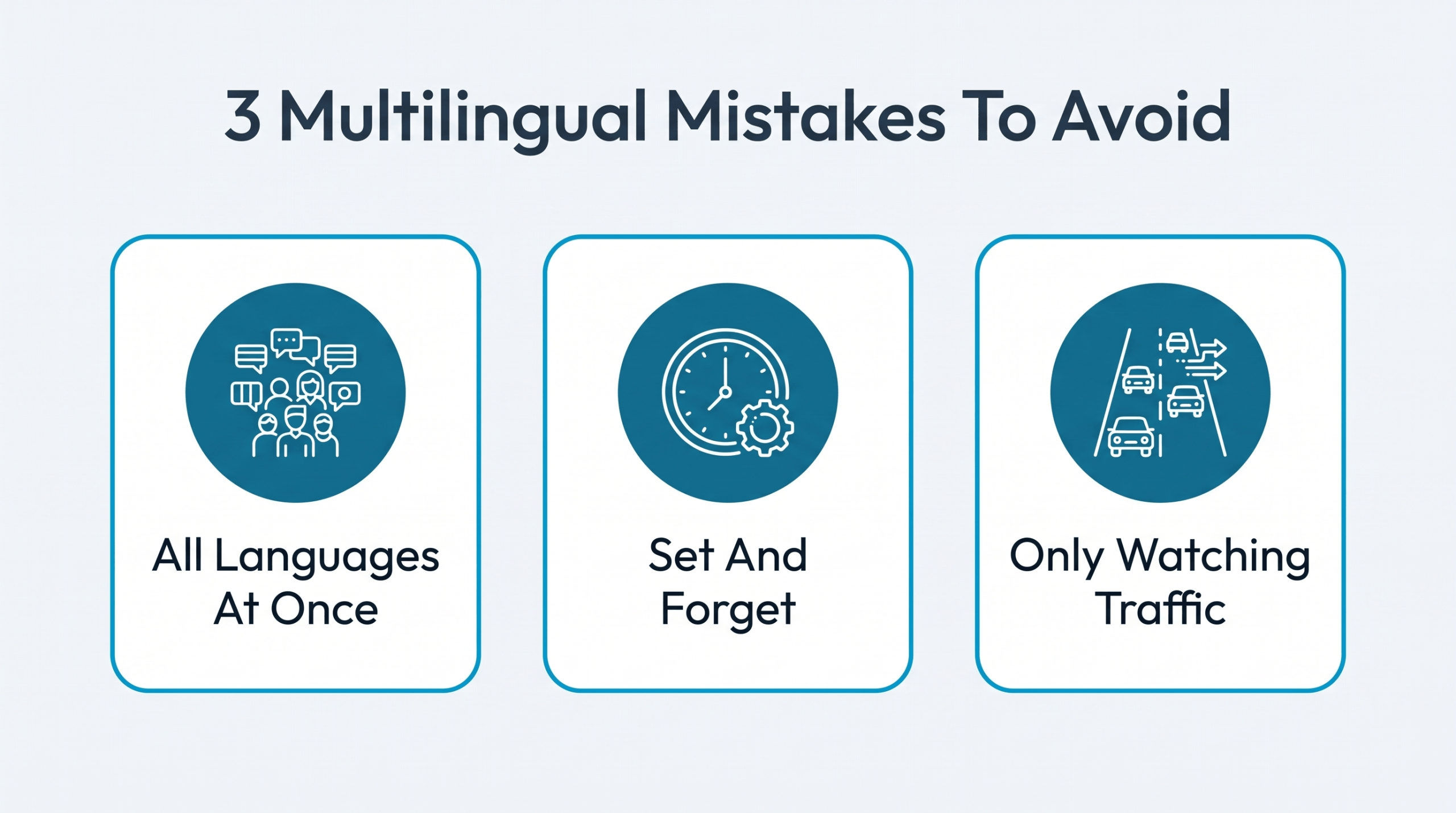
Even a solid multilingual eCommerce strategy can go wrong because of a few dumb, avoidable mistakes. These 3 bleed the results out of all your hard work. Each is easy to dodge once you know it is coming.
1. Rolling Out Multiple Languages At Once Instead Of Prioritizing
Excitement pushes brands to fire off 10 languages on launch day. What you get is 10 half-done experiences instead of one brilliant one. Your budget and focus get divided so much that no market gets the care it deserves. Far smarter to pick one or two markets with real promise and do them right first.
How to Fix: Rank your markets by real demand and how easy they are to enter. Then go deep on one before you even think about the next.
2. Launching It Once Then Letting It Fall Out Of Date
Localization isn’t a job you finish and forget. Your catalog shifts and you add products constantly. Every one of those changes has to reach every language you run. When the English site sprints ahead and the rest lag behind, shoppers hit old prices and outdated listings. That gap makes the whole store look abandoned.
How to Fix: Connect your store to a translation technology that flags new and changed content on its own, so every language updates together instead of months apart. A multilingual CMS can also keep localized pages organized as your catalog changes.
3. Judging Multilingual Website Success On Traffic Instead Of Sales Per Market
Traffic is a flattering number that hides the real story. A localized site can get visitors while barely turning any of them into buyers. Watch only your overall pageviews, and you will completely miss that one market’s booming while another is flat-out tanking. Real success shows up in sales and revenue, counted for each language on its own.
Different markets also convert at wildly different rates, for reasons that have nothing to do with your product. A payment gap or a clunky website translation can drag a whole country down. Per-market numbers are the only way to spot which lever actually needs pulling.
How to Fix: Track conversion and revenue per language and per market, not just total traffic. That is how you pour more into the winners and patch up the laggards fast.
Conclusion
Here’s what most stores miss. A translated storefront and a truly localized one can look almost identical, yet they convert like night and day. That gap is the whole opportunity. A multilingual eCommerce strategy isn’t about being everywhere at once. It is about winning one market so completely that locals forget you are foreign.
Pulling that off across language after language is a serious amount of work, and it is exactly what we handle at Ulatus. Expert human translators paired with smart technology, localizing eCommerce in over 200 languages. That runs from the product page all the way to the tricky compliance details. When you are ready to win your next market, reach out.