
About 90% of translators who use machine translation now post-edit its output, and roughly 72% of translation agencies now use AI tools as a regular part of their translation process. AI is not a novelty in this industry anymore, it is the default production layer. And yet, in a 2026 enterprise survey, 75.7% of buyers still required a human to proofread the AI output, and the report flatly called human judgment the non-negotiable foundation of every deployment.
That tension is really the whole story of AI-assisted Korean translation services in 2026. Agencies lean hard on technology for speed and consistency, then keep skilled Korean linguists firmly in charge of quality. So this guide opens the hood on how that actually works, from the tools an agency runs to why Korean in particular still resists full automation, so you can tell a real AI-plus-human service apart from one that is really just machine translation with little human editing behind it.
What AI Changed About Korean Translation, and What It Did Not
The change is real, and so are its limits. Understanding both is how you buy well.
AI is now the default layer
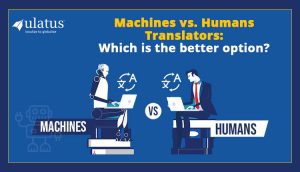
A modern Korean translation agency does not really choose between human and machine. It runs machine translation first to get a draft, then hands that draft to a human linguist to fix, refine, and sign off on. This hybrid approach is the fastest-growing service in the industry, because it captures most of the speed of automation while keeping a human accountable for the result. For high-volume work like product listings, support articles, or internal documentation, it has become the norm rather than the exception.
Korean still resists full automation
Here is what AI did not change. Korean is a context-heavy, honorific-driven language, and its hardest features are exactly the ones machines handle worst. Machine translation quality for Korean has improved a great deal, but the grammar and cultural nuance are complex enough that the post-editor has to be genuinely experienced, not just bilingual. Raw machine output makes a fine starting point for a Korean page and a poor finished product. That gap between draft and deliverable is where the agency actually earns its fee.
The Agency Tech Stack: Korean Translation Technology Under the Hood
When an agency says it is AI-assisted, it is describing a stack of connected tools, not a single button. Knowing the pieces helps you ask sharper questions.
Machine translation engines, chosen per job
The first layer is the machine translation engine, and good agencies do not marry just one. Nearly half of enterprises, 47.4% in the 2026 survey, run a multi-provider setup, picking a different engine by task, language pair, or content type. For Korean that really matters, because the engines have genuinely different strengths, which the next section gets into. An agency worth hiring can tell you which engine it reaches for on your kind of content and why, rather than defaulting to whatever happens to be cheapest.
TMS, translation memory, and glossaries
The engine also sits inside a bigger system. Most enterprise AI translation, 65.8% of it, happens inside a translation management system, or TMS, which orchestrates the workflow and keeps humans in the loop. Two tools inside that system do the quiet heavy lifting. Translation memory stores your previously approved translations and reuses them, so your phrasing stays consistent and you never pay to translate the same sentence twice. Around 73% of enterprises rely on it. A glossary, or termbase, then locks your key terms to approved Korean equivalents, and 79.6% of enterprises now insist on that kind of terminology enforcement. Together, they are why a good agency’s tenth project for you reads more consistently than its first.
Why multi-provider setups win
The reason to prefer an agency that runs several engines is pretty simple: no single tool is best at everything in Korean. A multi-provider setup lets the agency send your marketing copy to the engine that handles tone well and your technical manual to the one that keeps terminology tight. The market has grown up around exactly this flexibility. The translation management systems market alone was worth about 2.16 billion US dollars in 2024, and it is projected to reach 5.47 billion by 2030. The tooling is mature, and a serious agency uses it deliberately.
Where AI Still Fails Korean
This is the part generic guides skip, and it is the part that decides quality. Korean breaks machine translation in specific, predictable ways.
Honorifics and politeness registers
Korean bakes social relationships right into its grammar through honorifics, and picking the wrong level of politeness changes what your text quietly says about you. This is the clearest weakness of general-purpose models. ChatGPT often struggles with honorifics and formality when translating into Korean, simply because it lacks specialized training for those nuances. Papago, built by a Korean company, handles honorifics best and even offers a toggle to control the output register, while DeepL exposes honorific options in its paid tier. A human post-editor is the only reliable way to guarantee the register matches your audience, whether that is a formal enterprise buyer or a casual consumer.
Dropped subjects and context
Korean also frequently drops the subject of a sentence and leaves it to context. Machines often guess that missing subject wrong, producing text that is fluent and confidently incorrect, the kind of error a non-Korean reviewer will never catch. Papago tends to handle these common speech patterns, the dropped subjects and filler words, better than the general models do, but no engine gets them right every time. Someone who actually reads Korean has to confirm the meaning survived the trip.
What each tool is actually good at
The honest summary for 2026 is that no single engine wins Korean outright. Papago is the most reliable for Korean and other Asian languages, and for natural speech patterns. DeepL shows strong context comprehension on complex text. ChatGPT and Claude are strongest when you need context, tone, or glossary control and you are willing to prompt them carefully. Google Translate trails on Korean-specific handling. A good agency treats these as instruments in a kit, not rivals, and its linguists know which one to start from for your content. When professional translators reworked ChatGPT’s Korean subtitles for the film Minari, the result improved sharply, which is a tidy reminder that the machine produces a draft and the human produces the version people actually read.
This is also why an agency’s engine choice should never be invisible to you. If a provider quietly runs everything through one general model to save on tooling, then your Korean honorifics and dropped subjects are riding on the engine least equipped to handle them. The extra cost of a Korean-tuned engine plus a human pass is small next to the cost of a formal document that accidentally addresses your reader in casual speech, or a product description that reads as machine-made to the very customers you are trying to win.
MTPE: How Human and Machine Actually Combine
The mechanism that ties AI and humans together has a name: machine translation post-editing, or MTPE. It is worth understanding, because it is what you are really buying.
Light vs full post-editing
MTPE usually comes in two levels. Light post-editing fixes the errors and makes the machine draft accurate and readable, without polishing every phrase, and it suits high-volume, lower-stakes content where speed and cost matter most. Full post-editing takes the draft all the way to near human quality, with real attention to tone, flow, and cultural fit, and it is what you want for anything customer-facing or brand-defining. The price gap between the two is real, and a good agency will recommend the tier honestly instead of selling you the expensive one by default.
Human-in-the-loop, not edit-everything
The modern approach is not to edit every segment the same way. It is selective human intervention: the system flags whatever is risky or low-confidence, translation memory handles what is already approved, and the linguist spends their attention where it actually changes the outcome. This human-in-the-loop model is why MTPE manages to be both fast and safe. The machine does the volume, the human does the judgment, and the workflow decides which is which, segment by segment.
Match the tier to the risk
The practical rule is to match the service level to what a mistake would cost you. Internal reference material can ride on light post-editing. A legal notice, a medical instruction, or a marketing campaign should get full post-editing or full human translation, because in those cases a subtle Korean error is expensive and very public. Agencies that get this will ask about your content’s purpose before they quote, which is itself a good sign.
Quality, Security, and Governance
Speed is easy to sell. In 2026, the harder questions buyers ask are about quality control and data, and the answers separate mature providers from the rest.
Glossary enforcement, TM, and LQA
Quality in an AI workflow is not left to chance. It gets enforced by the glossary that holds your terms steady, the translation memory that keeps phrasing consistent, and a human language quality assurance step that reviews the output. In the 2026 survey, 75.7% of enterprises required human proofreading, and 68.4% ran automated QA checks on top. The results show why. Buyers reported faster releases and better consistency, but 20.4% still logged at least one quality incident after adopting AI. The QA layer is not bureaucracy, it is what catches that incident before your customers do.
Data security and non-training terms
Your source documents are often confidential, and feeding them into a public AI tool can quietly expose them. This is now a front-of-mind concern. In the 2026 survey, 88.8% of enterprises required or preferred bring-your-own API keys so their data stays under their own accounts. Another 56.6% prioritized contractual terms guaranteeing their content would not be used to train models or be retained, and more than 91% had AI governance frameworks either in place or in progress. A Korean agency handling your contracts or product plans should be able to tell you plainly how it isolates and protects your data.
The 2026 buyer’s priorities
The conversation has genuinely moved on. It is no longer whether an agency uses AI, since almost all of them do, but how safely and how well. Quality, privacy, and governance are now the deciding factors, and a provider that cannot speak to all three is telling you something.
What to Ask a Korean Translation Agency About Its Technology
You do not need to be technical to tell a real process from a thin one. You just need the right questions.
The questions that reveal real process
Run through these before you sign:
- Which machine translation engines do you use for Korean, and how do you choose between them?
- Does the work run through a TMS with translation memory and a glossary built for my account?
- What post-editing tier is this quote, light or full, and what changes between them?
- Who performs the human review, and are they a native Korean linguist with expertise in my subject?
- How is my data handled: bring-your-own API keys, non-training guarantees, and secure storage?
Vague answers to these usually mean thin, lightly-edited machine output dressed up as a managed service.
Matching the service tier to your content
Then match the tier to the job. Be clear about your content’s purpose and risk, and let the agency recommend light post-editing, full post-editing, or full human translation accordingly. A provider that pushes everything to the cheapest tier, or the most expensive, without ever asking about your content is optimizing for itself, not for you.
Your Next Step
AI has genuinely changed how Korean translation is done, but it has not changed who is responsible for the result. The best agencies use technology to move faster and stay consistent, then put an experienced Korean linguist in charge of everything AI cannot be trusted to get right, starting with honorifics, context, and tone.
So before you sign with any korean professional translation service provider, ask exactly how AI fits their workflow: which engines, what post-editing tier, how glossaries and translation memory are enforced, and how your data is protected. And if you want a straight answer and a workflow built around your content, send us your material and your target audience, and we will show you exactly where AI helps and where our linguists take over.